What Will a Sewer Scope Inspection Reveal?
Written by Steven Shipler, Texas Licensed Master Plumber, Responsible Master Plumber, Texas License #45825.
A sewer scope inspection can reveal hidden sewer line problems that are impossible to see from the surface. The home may look clean, the toilets may flush, and the yard may look normal, but the underground sewer line may still have defects that could lead to backups, sewage overflows, expensive repairs, or failed real estate negotiations.
The Sewer Inspection Company uses professional sewer camera equipment to inspect the inside of the sewer line and document what is actually happening underground. Every inspection includes a Certified Master Plumber Report from a Licensed Texas Master Plumber and a narrated YouTube video.
A sewer scope inspection does not guess. It shows the actual condition of the sewer line so buyers, sellers, Realtors, and homeowners can make informed decisions.
Schedule a Sewer Scope Inspection Today
Certified Master Plumber Report + Narrated YouTube Video Included.
Call Now: 972-333-5448Email: stshipler@gmail.com
1. Blocked Pipes
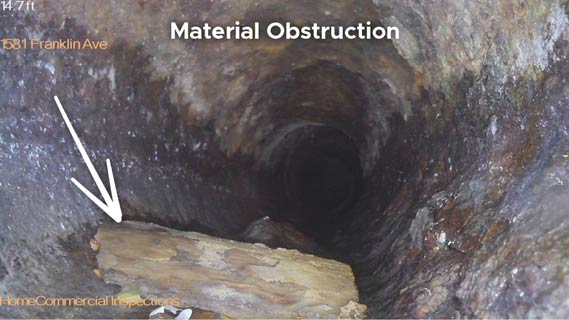
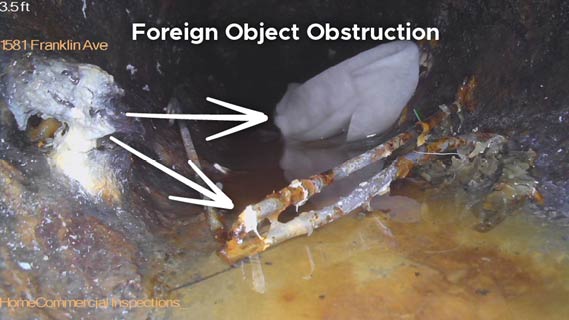
Blocked pipes are one of the most common findings during a sewer scope inspection. Debris, grease, wipes, sludge, construction material, or foreign objects can restrict the flow of wastewater through the line.
If left unresolved, a blockage can lead to slow drains, recurring backups, sewage odors, overflowing cleanouts, or sewage entering tubs, showers, and floor drains.
2. Tree Root Intrusion
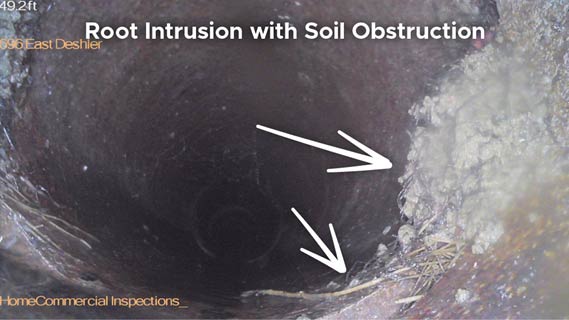
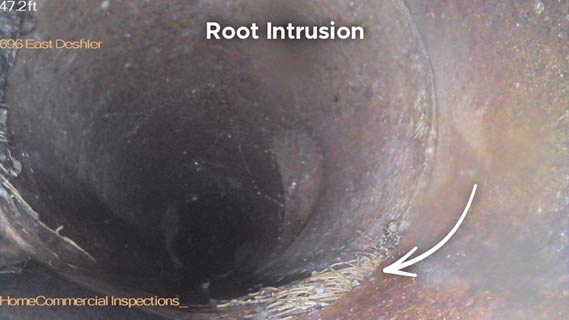
Tree roots are aggressive. They search for moisture and can enter sewer pipes through cracks, joints, offsets, and weak pipe connections. Once roots enter the line, they can grow, catch debris, restrict flow, and eventually cause damage.
I have seen homes where the buyer thought the sewer line was fine because everything drained during the showing. Then the camera showed roots inside the pipe. That is the kind of hidden problem you want to know about before closing.
3. Outdated Pipes
Older homes may have clay, cast iron, Orangeburg, or early plastic sewer piping. These materials can deteriorate, separate, crack, scale, sag, or fail over time.
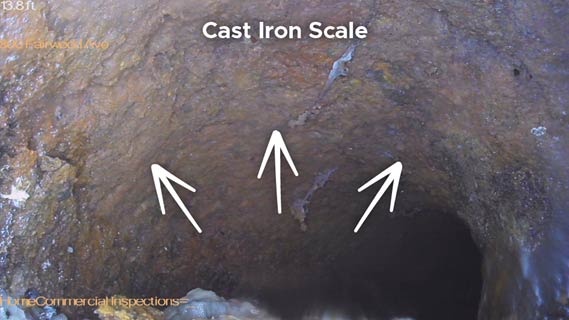
Cast iron sewer lines may show scaling, bottom rot, corrosion, cracking, or rough interior surfaces that catch debris. Clay pipes may separate at joints or allow root intrusion. Older plastic pipe may have poor slope, settlement, or improper installation issues.
4. Incorrect Fittings and Faulty Installation
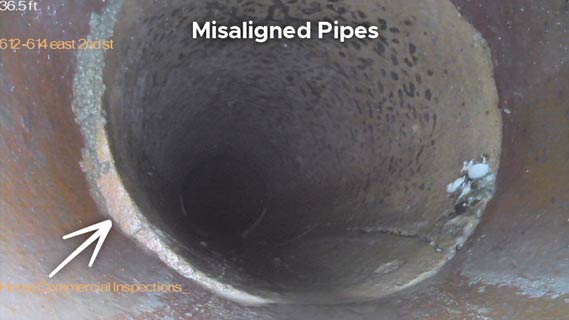
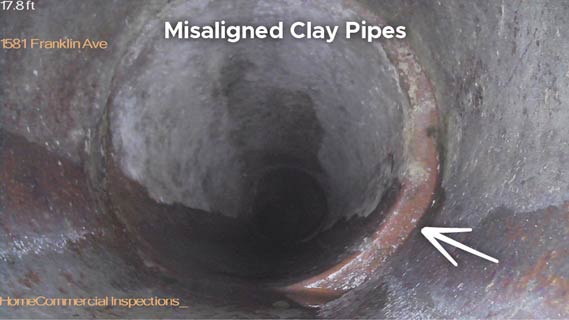
A sewer scope inspection may reveal incorrect fittings, poor transitions, misaligned pipe, bad slope, improper repairs, or faulty installation. These issues can disrupt wastewater flow and lead to leaks, corrosion, structural damage, and repeated backups.
This is especially important in homes that have been remodeled, flipped, repaired quickly, or worked on without proper plumbing supervision.
5. Sewer Bellies and Standing Water
A sewer belly is a low section of pipe that holds water. Wastewater should move by gravity, so standing water can indicate poor slope, settlement, soil movement, foundation movement, or a sagging pipe.
Not every small amount of water means the line must be replaced, but significant standing water deserves attention because it can collect solids, grease, paper, and debris.
6. Cracks, Breaks, Separations, and Offsets
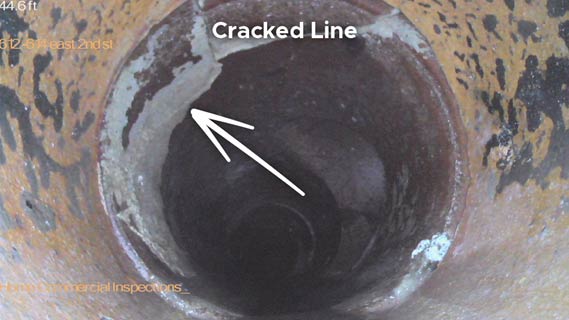
Sewer scope inspections can reveal structural defects including cracked pipe, broken sections, separated joints, and offsets. These defects can allow soil, roots, or water to enter the line and can eventually lead to collapse or repeated sewer backups.
Location matters. A small defect in the yard may be a different repair conversation than a defect under a slab, driveway, garage floor, or finished interior space.
3 City References
- Dallas, TX: Older homes, mature trees, long sewer runs, and cast iron systems make sewer scope inspections important before closing.
- Plano, TX: Mature neighborhoods, foundation movement, and older sewer laterals can create hidden underground sewer concerns.
- Richardson, TX: Aging cast iron systems, root intrusion, sewer bellies, and under-slab drain issues are common sewer inspection findings.
DFW Service Area Map
Tools and Equipment Used
- RIDGID SeeSnake Sewer Camera: Used to visually inspect and record the inside of the sewer line.
- RIDGID SeekTech Locator: Used to help locate the camera head and identify approximate underground defect locations when conditions allow.
- Line Transmitter and Locating Equipment: Used to support sewer path tracing, cleanout evaluation, and repair planning.
Watch Real Sewer Inspection Videos
Sewer Inspection Video 1
Sewer Inspection Video 2
Sewer Inspection Video 3
Sewer Inspection Video 4
Sewer Inspection Video 5
Sewer Inspection Video 6
Sewer Inspection Video 7
Two 5-Star Reviews
★★★★★
“The sewer scope showed roots and standing water before we bought the home. The report helped us negotiate repairs.”
— Plano Home Buyer
★★★★★
“Clear video, fast scheduling, and a Master Plumber Report that made the findings easy to understand.”
— Richardson Realtor
Helpful Internal Links
- The Ultimate Guide to Sewer Inspections Before Buying a Home
- What Can a Sewer Camera Inspection Find?
- Sewer Inspection Checklist for Home Buyers
- Real Home Buyer Success Stories
- Testimonials
- Contact Us
Schedule Online Now
See available dates and reserve your sewer inspection below.
15 Frequently Asked Questions
Is a sewer scope inspection really necessary?
Yes. It helps identify hidden underground sewer defects before buying, selling, negotiating, or approving repairs.
How long does a sewer scope inspection take?
Most inspections take about 45 to 90 minutes depending on access, line length, and pipe condition.
Will I receive a video of the inspection?
Yes. Every sewer camera inspection includes a narrated YouTube video.
Can a sewer scope detect all problems?
No inspection can guarantee every hidden condition, but it can identify many visible issues inside the accessible sewer line.
What happens if problems are found?
You receive findings, video evidence, and a Certified Master Plumber Report to help guide the next decision.
Is this service included in a standard home inspection?
Usually no. Sewer scope inspections are normally a separate specialty inspection.
How much can sewer repairs cost?
Sewer repairs can range from smaller spot repairs to major under-slab repairs, tunneling, reroutes, or full sewer replacements costing many thousands of dollars.
Can a sewer scope find blocked pipes?
Yes. It can show visible blockages from grease, debris, roots, wipes, sludge, or foreign objects.
Can it find tree roots?
Yes. Tree root intrusion is one of the most common findings during sewer camera inspections.
Can it reveal outdated pipes?
Yes. It can help document cast iron deterioration, clay pipe separation, older plastic issues, and other visible pipe conditions.
Can it identify incorrect fittings?
Yes, when the fitting is visible and accessible by camera.
Can the defect be located?
When conditions allow, locating equipment can help identify the approximate underground location of the camera head and visible defect area.
Do I receive a Certified Master Plumber Report?
Yes. You receive a Certified Master Plumber Report from a Licensed Texas Master Plumber, Texas License #45825.
Can Realtors use the report?
Yes. Buyers, sellers, Realtors, and investors can use the report during due diligence and negotiations.
How do I schedule?
Call 972-333-5448, email stshipler@gmail.com, or use the online scheduling section above.
Plumbing Code Reference Section
Always verify adopted local code and city amendments with the Authority Having Jurisdiction.
| # | Reference | Why It Matters | Code |
|---|---|---|---|
| 1 | IPC Chapter 7 — Sanitary Drainage | References building drains, building sewers, cleanouts, slope, and drainage system performance. | IPC Ch. 7 |
| 2 | UPC Chapter 7 — Sanitary Drainage | References sanitary drainage, sewer piping, cleanouts, slope, and system evaluation. | UPC Ch. 7 |