
V-SCOPE Sewer Camera Inspection • DFW
A blocked sewer camera inspection in DFW does not automatically prove that the pipe has collapsed. It means the camera could not safely continue from the available access point. The reason may be heavy scale, roots, debris, an offset joint, a tight fitting, standing water, or another obstruction.
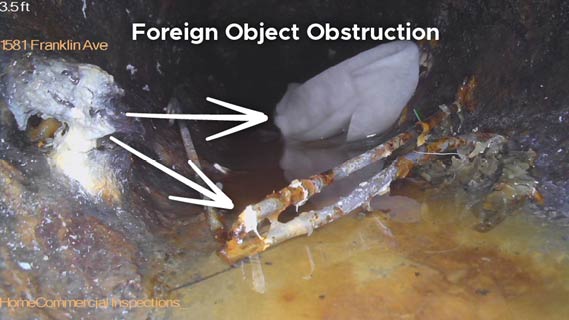
When a camera stops, the useful result is not a guess. It is a documented endpoint: what was visible, how far the camera traveled, where the endpoint was located, and why the inspector stopped.
A camera stop is a finding—not a complete diagnosis
A sewer camera is designed to travel through an accessible drainage path. However, the operator should not force the head through a restriction that could trap or damage the equipment. A stopped run therefore marks the limit of the visual evidence from that access point.
The video should show the approach to the obstruction. In addition, narration should explain whether the view suggests scale, roots, debris, a sharp turn, standing water, or a displaced connection. If the image is unclear, the report should say that plainly instead of labeling an unseen defect.
What a documented endpoint should include
The V-SCOPE process combines a self-leveling sewer camera, a sonde transmitter, and a surface receiver. Together, those tools allow Steven Shipler to narrate the visible conditions, record the travel distance, and obtain a surface locate with an estimated depth when conditions permit.
A useful Certified Master Plumber Report should identify the access used, the portion viewed, the endpoint, the evidence supporting the conclusion, and the inspection limitation. That gives a buyer or homeowner a specific fact pattern to discuss with a repair plumber rather than a vague statement that the camera “could not get through.”
Possible next steps after the camera cannot pass
The right next step depends on the evidence. Cleaning may be appropriate when removable buildup or roots block the view. A second access point may help when the first route includes a tight fitting. If the obstruction appears structural, a licensed repair plumber may recommend excavation, access installation, or another diagnostic method.
Do not assume that clearing the blockage solves the entire concern. After access is restored, a follow-up camera run can show the pipe beyond the original endpoint. That second look is often the only way to learn whether another defect is farther downstream.
Why location and depth matter
A surface locate does not replace excavation or utility marking, and depth readings are estimates affected by site conditions. Even so, the recorded position can narrow the area that deserves further evaluation. It also helps distinguish an under-slab endpoint from a restriction in the yard lateral.
That distinction matters across Plano, Richardson, and Allen because a line can pass through different materials, additions, landscaping, and repair zones before reaching the public connection.
Three equipment references that matter
- Self-leveling sewer camera: records an upright view of accessible pipe interiors.
- Sonde transmitter and surface receiver: help locate selected camera positions and estimate depth when conditions allow.
- Distance counter and recording system: connect narrated footage to the route traveled from the access point.
What the $239 standard inspection includes
The standard inspection is $239. Review our sewer inspection services and documentation before booking. The V-SCOPE service includes a camera inspection of accessible sewer piping, narrated video, locate and estimated depth when conditions permit, and a Certified Master Plumber Report from Steven Shipler, Texas Responsible Master Plumber #45825.
This educational guide explains inspection limits; it does not describe a specific customer project. Know What’s Underground, Before You Buy.
Schedule a V-SCOPE sewer inspection
Call 972-333-5448 or choose an appointment online.
Book an inspectionService-area context
The Sewer Inspection Company serves homeowners, buyers, sellers, and real-estate professionals across Dallas–Fort Worth. The three local examples in this guide—Plano, Richardson, and Allen—illustrate why the route, access, and property layout must be documented instead of assumed.
Two plumbing-code references
Plano adopted the 2024 IPC with local amendments. Its Section 305.4.1 amendment addresses sewer depth; Section 306.2.5 addresses underground plastic-pipe installation.
These are Plano requirements, not rules for every DFW city. Confirm the governing jurisdiction and applicable code for each project. A camera cannot verify hidden bedding or establish code compliance. Model codes become enforceable through local adoption and amendments; a diagnostic camera inspection does not replace municipal inspections.
Related resources
Seven field-video examples
These examples show why recorded evidence and narration are more useful than a one-line conclusion.
Two supplied five-star reviews
“Excellent experience. They arrived prepared, inspected the sewer line carefully, and documented everything they found. I really appreciated having the video and a clear explanation of what was happening underground instead of just being told everything looked fine.”
— Cameron Liingle
“Great sewer inspection service. They took the time to properly inspect the entire accessible sewer line instead of rushing through it. The findings were clearly explained, and having a written report from a Master Plumber made it much easier to understand what needed to happen next.”
— Mark Ryan
Frequently asked questions
Is a sewer scope inspection really necessary?
It is not required for every transaction, but it can reveal accessible underground conditions that a standard visual home inspection cannot see. Its value is highest when sewer condition could affect the purchase or repair plan.
How long does a sewer scope inspection take?
Time varies with access, length, fittings, obstructions, and the number of camera runs. The appointment should allow enough time to record and explain the accessible line rather than rush to an endpoint.
Will I receive a video of the inspection?
Yes. The V-SCOPE service includes a narrated inspection video plus a Certified Master Plumber Report describing visible findings and limitations.
Can a sewer scope detect all problems?
No. A camera only documents accessible visible surfaces. Standing water, deposits, obstructions, inaccessible branches, and conditions outside the pipe can limit what it reveals.
What happens if problems are found?
The report documents the evidence and recommended next step. That may include cleaning, additional access, repair evaluation, or follow-up inspection by an appropriate licensed professional.
Is this service included in a standard home inspection?
Usually not. A standard home inspection generally does not include a specialized camera run through the private sewer line, so confirm the scope with the home inspector.
How much can sewer repairs cost?
Repair cost varies widely with location, depth, access, material, scope, permits, and restoration. The Sewer Inspection Company does not invent a repair price from camera footage; obtain property-specific bids when work is recommended.
Does a stopped camera mean the sewer line is collapsed?
No. A stop can result from roots, scale, debris, a fitting, an offset, standing water, or a structural failure. The video and report should describe only what the evidence supports.
Should the camera be forced past an obstruction?
No. Forcing the camera can damage equipment or leave it trapped. A careful inspection records the endpoint and recommends a reasonable next step.
Can a second cleanout provide a better view?
Sometimes. A second accessible entry can approach the same area from another direction or bypass a difficult fitting.
Can cleaning change the inspection result?
Yes. Cleaning may expose pipe surfaces that were hidden by buildup. A post-cleaning camera run can then document the newly visible section.
What should the narrated video say at the endpoint?
It should identify the travel distance, visible condition, reason for stopping, and whether a locate or depth estimate was obtained.
Is an incomplete camera run still useful?
Yes, if its limits are clearly documented. It can identify an accessible section, record an obstruction, and guide the next diagnostic step.
Can a camera see through standing water or debris?
Only partly. Water and debris can hide the bottom or walls of the pipe, so the report should state when visibility is limited.
When should the line be reinspected?
Reinspect after cleaning, access work, or repair when you need evidence of the previously unseen section or confirmation of completed work.
Book with Steven Shipler
For a blocked sewer camera inspection DFW, schedule The Sewer Inspection Company’s $239 standard inspection. Call 972-333-5448 or use the calendar below.