
Practical answer: Grease, sludge, dirty water, or soft deposits can coat a sewer camera lens and hide the pipe surface. The inspection can still document access, travel, recurring obstruction, water behavior, and the point where visibility becomes unreliable, but it should not claim that hidden joints or cracks were cleared.
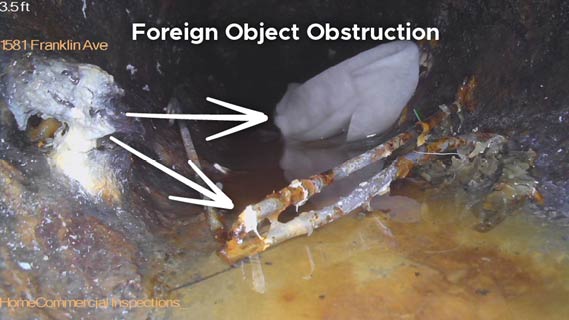
A dirty lens changes the evidence
A blurred or coated image may show that material is present without showing the wall behind it. The narrator should distinguish a visible deposit from the unseen pipe surface. Wiping that occurs as the camera moves can briefly improve the view, but the limitation may return.
Deposits can be local or extend through a section
Material may collect at a fitting, rough pipe, low area, kitchen connection, or reduced opening. Repeated coating at similar footage provides context, while a single smear can come from passing one deposit. The continuous narrated video is more useful than an isolated screenshot.
Water depth matters too
If the camera head is partly submerged, the lens may alternate between clear air and cloudy water. Flow from fixtures can temporarily change visibility. Standing water can be associated with a low area or downstream restriction, but the camera view alone may not determine the exterior cause.
Record what the equipment actually established
The V-SCOPE camera records the accessible interior, the distance counter identifies cable travel, and the sonde with surface receiver can estimate a position and depth near a recurring obstruction. These equipment references should be tied to the access and direction in the report.
Cleaning and inspection are different scopes
Mechanical cleaning, hydrojetting, or another preparation method may improve access or visibility when suitable for the pipe. The condition and material must be considered before cleaning. A later scope can document the post-cleaning interior, but no cleaning method guarantees that every defect becomes visible.
DFW reports should state the unknown section
Whether the property is in Plano, Richardson, Allen, Garland, or Dallas, Steven Shipler’s Certified Master Plumber Report should identify the clear footage, obscured footage, stopping point, water or deposits, locate result, and any recommended follow-up. The report should never treat an unseen section as defect-free.
Local plumbing-code references
Local code adoption applies to installation and repair work; a sewer camera inspection documents visible conditions and does not certify code compliance. The City of Plano’s official code page lists its 2024 codes as effective August 1. City of Dallas Ordinance 32422 adopted the 2021 International Plumbing Code with Dallas amendments; Dallas lists the 2021 ICC codes as effective May 12, 2023. These are separate jurisdictions and editions, and neither automatically governs another city.
Related sewer-inspection resources
Seven field-video examples
These field videos show why access, narration, footage, locating, and stated limitations matter. Each property requires its own evidence.
Dallas–Fort Worth service area
Appointments are available across the DFW area, including Plano, Richardson, Allen, Frisco, Dallas, Garland, and nearby communities.
Frequently asked questions
Does grease on the lens prove the line is blocked?
No. It proves material contacted the lens. The extent, opening, flow, and ability to pass determine whether a restriction is also visible.
Can the camera be rinsed during the inspection?
The lens can be cleaned outside the pipe, and controlled water may sometimes help observation, but the method must not create an unsafe or misleading condition.
Will hydrojetting always clear the view?
No. Pipe condition, material, access, deposits, roots, damage, and equipment limits affect the result.
Can sludge hide a crack or separated joint?
Yes. Coating, debris, and water can obscure the surface, so hidden defects cannot be ruled out.
Why does the image clear and then blur again?
The lens may wipe against the pipe or pass through alternating deposits and water. Repeated footage helps identify the pattern.
Can the obstruction be located from the surface?
If the camera head can reach the area and its sonde signal is usable, the receiver can estimate position and depth.
Should a buyer accept an obscured inspection?
The report should explain the unviewed section. The buyer can decide whether cleaning, alternate access, or reinspection is appropriate before closing.
What belongs in the narrated video?
The narrator should state access, direction, footage, visible material, water depth, clear and obscured sections, stops, locate results, and limitations.
Is a sewer scope inspection really necessary?
It is especially useful when a purchase, remodel, drainage concern, or uncertain sewer history makes the accessible building sewer important. The scope supplies evidence about visible conditions; it does not guarantee that every concealed defect will appear.
How long does a sewer scope inspection take?
Access, pipe length, restrictions, water, deposits, and findings affect the time. A careful inspection should document important locations and limitations instead of rushing through the line.
Will I receive a video of the inspection?
Yes. The standard V-SCOPE service includes a narrated video that connects visible conditions to the direction of travel, distance, and access point.
Can a sewer scope detect all problems?
No. The camera shows the accessible pipe interior at the time of inspection. Water, debris, sharp turns, inaccessible branches, or a blocked passage can limit visibility.
What happens if problems are found?
The report documents the visible condition. When appropriate, the camera-head sonde and surface receiver can mark an area and estimate depth. The Certified Master Plumber Report helps the client discuss next steps with a repair professional.
Is this service included in a standard home inspection?
Usually not. A general home inspection commonly does not include pushing specialized camera equipment through the building sewer. Confirm the written scope of every service.
How much can sewer repairs cost?
Repair costs vary widely with location, depth, access, pipe material, length, damage, and restoration. The $239 inspection is not a repair quote; documented evidence helps a contractor price the actual condition.
Book a documented V-SCOPE sewer inspection
The standard inspection price is $239. Call 972-333-5448 or choose a time below.
Know What’s Underground, Before You Buy.