Case Study: The Seller Said the Sewer Line Was Replaced. It Wasn’t — Not All of It.
Written by Steven Shipler, Texas Licensed Master Plumber, Registered Master Plumber — Texas License #45825, MBA, and host of The 4 Guys Education on YouTube.
“The sewer line has already been replaced.” It’s one of the most common things a buyer hears during a home purchase, and it’s often true — partially. This case study covers a real situation where a seller’s claim that the sewer line “was replaced” turned out to be only half the story, and the missing half nearly cost the new homeowner tens of thousands of dollars.
A partial sewer line replacement can look like a full replacement on paper. Only a sewer scope and line camera inspection can confirm whether the entire line was actually replaced — or whether old, deteriorating pipe was left behind and simply not disclosed.
Don’t Take “It Was Replaced” at Face Value
Get a certified Master Plumber Report before you close.
Call Now: 972-333-5448The Claim: “The Line Was Replaced”
During the disclosure process, the seller told the buyer’s agent that the home’s sewer line had been replaced. On paper, that should have put the buyer’s mind at ease. In reality, that statement was technically true and practically misleading at the same time.
When our sewer scope and line camera inspection went in, the picture underground told a very different story than the one on the disclosure form.
What the Camera Actually Found
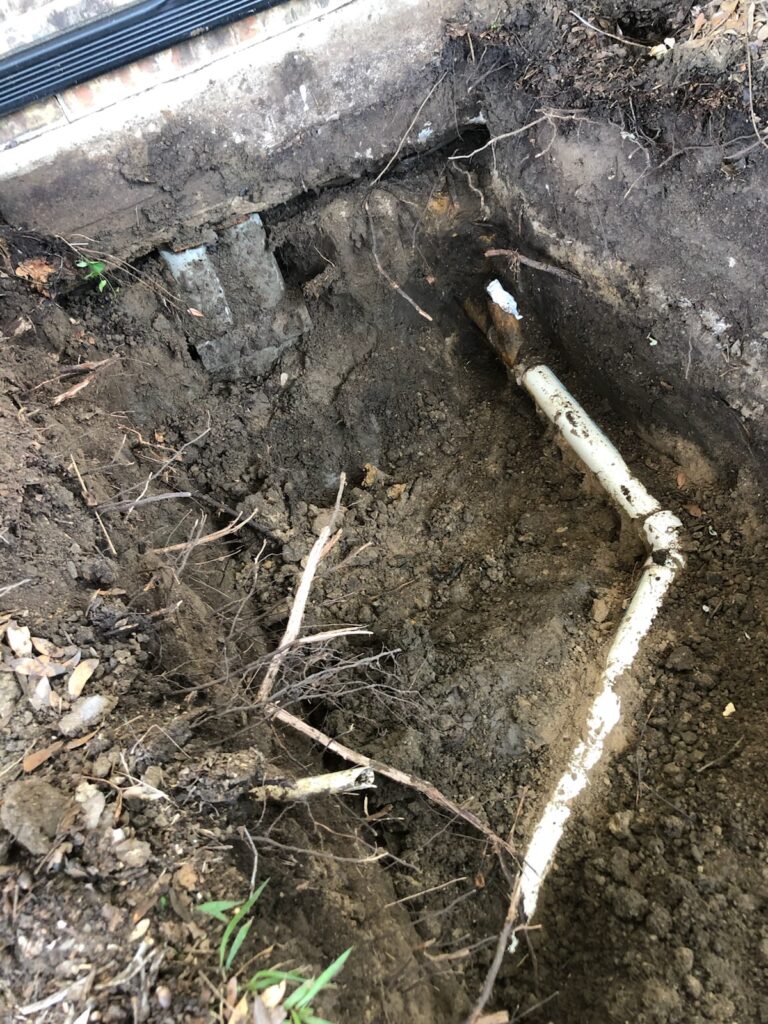
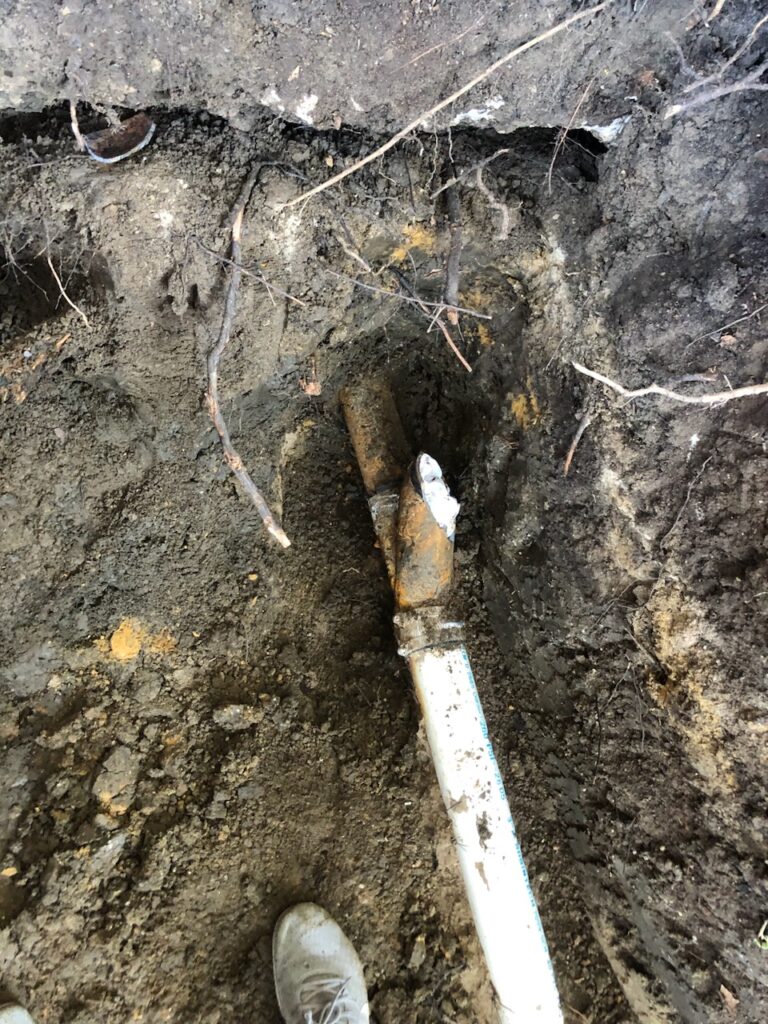
The sewer line had indeed been worked on — but only in sections. Portions of the original run had been replaced with modern PVC pipe. Other sections, however, still had the home’s original cast iron pipe left in place, untouched by whatever repair had been done previously.
That leftover cast iron wasn’t just old. It was already deteriorating internally, the kind of slow corrosion and scaling that doesn’t show up above ground and doesn’t show up on a disclosure form, because the previous owner likely never had it camera inspected to begin with.
A partial sewer replacement is still a partial replacement, no matter how it’s described on a disclosure form. Only a camera can confirm what “replaced” actually means for a specific home.
A Personal Reflection From This Job
I’ve run cameras through a lot of sewer lines that homeowners were told had “already been fixed.” More often than people expect, what actually happened was a spot repair or partial replacement addressing whatever section was causing a problem at the time — not the whole line. This case stuck with me because the leftover cast iron wasn’t just old pipe sitting quietly underground. It was structurally compromised and close to failing on its own, and it had no reason to hold up under any additional stress.
Then the Foundation Work Happened
Shortly after the buyer closed on the home, foundation repair work was performed to correct settling issues unrelated to the sewer line itself. Foundation lifting and leveling work puts real force on everything connected to the slab, including whatever plumbing runs beneath and around it.
The new PVC sections held up fine. The old cast iron sections did not. As the house was lifted during the foundation repair, the remaining cast iron pipe — already brittle and deteriorating — began to collapse under the shifting weight and pressure.
Without the sewer scope inspection performed before closing, this failure would have been discovered later, most likely the hard way: through backups, sewage odor, or a sudden drainage failure with no advance warning and no leverage to negotiate repair costs with anyone.
Why This Matters for Every Home Buyer
This case illustrates exactly why a sewer scope inspection needs to happen before closing, regardless of what the seller says was done to the line:
- “Replaced” can mean the whole line, or it can mean one section of the line
- Old pipe left in place doesn’t announce itself — it fails quietly, underground, until it doesn’t
- Foundation repair work can be the exact stress event that pushes deteriorating pipe past the point of no return
- A camera inspection is the only way to confirm what pipe material and condition actually exists along the full run, not just the parts someone chose to mention
How the Sewer Scope Inspection Changed the Outcome
Because the inspection was performed before closing, the buyer had documented video evidence of the leftover cast iron and its deteriorating condition. That gave them real options: negotiate a price adjustment, request full replacement before closing, or move forward with full knowledge of what they were taking on and budget accordingly.
Instead of an unexpected multi-thousand-dollar emergency repair discovered after move-in — likely during or right after major foundation work — the buyer went in with facts instead of assumptions.
Tools and Equipment Used in This Inspection
- RIDGID SeeSnake Sewer Camera: Used to record and inspect the full length of the sewer line, revealing where PVC ended and old cast iron began.
- RIDGID Locator: Used to pinpoint the exact location and approximate depth of the transition points and the deteriorated cast iron sections.
- Line Transmitter and Locating Equipment: Used to trace the full path of the line and confirm which sections had and had not been replaced.
City References: Plano, Frisco, and McKinney
This kind of partial sewer replacement discovery is common across older North Texas neighborhoods. In Plano, many homes from the 1970s and 1980s have had piecemeal plumbing work done over decades of ownership changes. In Frisco, homes closer to older town center areas can have similar mixed-pipe histories. In McKinney, older homes built before 1990 frequently have original cast iron sewer systems that may have only been partially addressed during past repairs.
The city changes, but the lesson stays the same: never assume “replaced” means “fully replaced” without camera evidence.
What Customers Are Saying
★★★★★
“The seller told us the sewer line was replaced and we almost didn’t bother with a scope inspection. So glad we did — turns out only half of it was actually new. That report saved us from a huge surprise repair.”
— Home Buyer, Plano, TX
★★★★★
“Steven showed us the video himself and explained exactly where the old cast iron started. Having a licensed Master Plumber walk us through it in plain English made all the difference in our negotiation.”
— Home Buyer, Frisco, TX
Why a Licensed Master Plumber Report Matters
Every sewer scope and line camera inspection from The Sewer Inspection Company comes with a certified Master Plumber Report, prepared by Steven Shipler, a Registered Master Plumber holding Texas License #45825. This isn’t a generic inspection printout — it’s a documented finding from someone licensed by the state of Texas to evaluate plumbing systems at the highest level.
That distinction matters enormously in a case like this one. A report backed by an actual Master Plumber license carries real weight in negotiations, with real estate agents, and with anyone who needs to understand not just what the camera saw, but what it actually means for the home’s plumbing system going forward.
Helpful Internal Links
- The Ultimate Guide to Sewer Inspections Before Buying a Home
- What Can a Sewer Camera Inspection Find?
- Sewer Inspection Checklist for Home Buyers
- Testimonials
- Real Home Buyer Success Stories
- Contact Us
Don’t Buy Based on a Disclosure Statement Alone
Get the sewer line camera inspected before you close — and get it in writing from a licensed Master Plumber.
Call Now: 972-333-5448Schedule Online
Pick a time that works for you below.
Frequently Asked Questions (FAQs)
Is a sewer scope inspection really necessary?
Yes. As this case shows, a seller’s disclosure statement about a “replaced” sewer line does not always tell the full story. A sewer scope inspection is the only way to confirm the actual condition and material of the entire line.
How long does a sewer scope inspection take?
Most sewer scope inspections take between 30 minutes and an hour, depending on the length of the line and accessibility of the cleanout.
Will I receive a video of the inspection?
Yes. Video documentation is provided along with a written Master Plumber Report explaining exactly what was found, including any transition points between old and new pipe.
Can a sewer scope detect all problems?
A sewer scope can detect most structural and material issues within the accessible portion of the line, including where old and new pipe sections meet, but it cannot see through solid blockages or access every branch line.
What happens if problems are found?
If a problem is found, our licensed Master Plumber explains what was discovered, discusses repair options, and provides a written report you can use for negotiation, budgeting, or insurance purposes.
Is this service included in a standard home inspection?
No. A standard home inspection typically does not include a sewer scope or line camera inspection. This is a specialized service performed separately, which is exactly why issues like partial pipe replacement often go unnoticed.
How much can sewer repairs cost?
Sewer repair costs vary widely based on the type and severity of the issue, ranging from a few hundred dollars for a minor spot repair to several thousand dollars for a full line replacement, especially if collapsed cast iron sections require excavation.
Can foundation repair cause an existing sewer problem to get worse?
Yes. Foundation lifting and leveling work can put significant stress on connected plumbing lines. Pipe that is already deteriorating, like old cast iron, may collapse or fail during or shortly after foundation work.
If a seller says the line was replaced, should I still get an inspection?
Yes, always. As this case study shows, “replaced” can mean a partial replacement rather than the full line. A camera inspection confirms exactly what was and wasn’t done.
Can old cast iron pipe be mixed with newer PVC pipe in the same sewer line?
Yes. This is common when a previous repair addressed only the section that was failing at the time, leaving the rest of the original pipe material in place.
What should I ask a seller about sewer line repairs before buying?
Ask for the specific scope of any prior repair, including which sections were replaced, what pipe material was used, whether permits were pulled, and whether a camera inspection was performed to confirm the work.
Can I use a sewer scope report to negotiate the sale price?
Yes. A documented Master Plumber Report showing undisclosed pipe conditions can be a valuable tool in requesting repairs or a price adjustment before closing.
Do you provide emergency service if a sewer line collapses after closing?
Yes. If a sewer line fails unexpectedly, prompt inspection and repair scheduling is available to assess the damage and outline next steps.
Is cast iron pipe always a problem?
Not always, but cast iron pipe installed decades ago is approaching or past the age where internal corrosion, scaling, and structural weakening become common. A camera inspection is the best way to assess its actual current condition.
What areas do you serve for sewer scope inspections?
The Sewer Inspection Company provides sewer scope and line camera inspections throughout Plano, Frisco, McKinney, and the greater DFW metro area.
Service Area
Proudly serving Plano, Texas and the surrounding DFW metro.
Plumbing Code Reference Topics
Sewer line replacement and pipe material transitions should be evaluated with attention to sanitary drainage and approved materials standards. Always verify the adopted code and local requirements with the authority having jurisdiction.
| # | Code Topic | Why It Matters |
|---|---|---|
| 1 | IPC Sanitary Drainage | Primary reference topic for building sewer, building drain, and pipe transition requirements. |
| 2 | UPC Approved Materials and Workmanship | Provides context for evaluating whether mixed pipe materials, like cast iron joined to PVC, meet acceptable transition and workmanship standards. |