
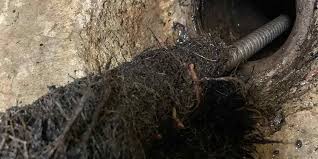
Are There Mature Trees Near the Sewer Path? Why Plano Homebuyers Should Camera-Scope the Sewer Line
Written by Steven Shipler, Texas Licensed Master Plumber, Responsible Master Plumber (RMP), MBA, and host of The 4 Guys Education on YouTube.
Are there mature trees near the sewer path? If you are buying a home in Plano, Allen, McKinney, Richardson, Frisco, or North Dallas, that question matters. Mature trees can be beautiful, but roots near older sewer lines can create hidden problems that may not show up during a normal walkthrough.
Buying a Home With Mature Trees Nearby?
Schedule a sewer camera inspection before closing.
Call Now: 972-333-5448One of the smartest questions a homebuyer can ask is simple:
Are there mature trees near the sewer path?
That question matters because mature trees and underground sewer lines often live in the same space.
The tree may look healthy.
The yard may look beautiful.
The home may show well.
The toilets may flush.
The sinks may drain.
But that does not prove the sewer line is free from root intrusion, cracks, separations, bellies, standing water, or older pipe deterioration.
Tree roots are not automatically a problem.
But when roots find small openings, cracks, separated joints, older clay pipe, deteriorated cast iron, or poorly sealed pipe transitions, they can enter the sewer line and restrict flow.
The EPA notes that tree roots entering through defects or openings in sewer lines may cause blockages.[1]
That is why The Sewer Inspection Company recommends sewer camera inspections for homebuyers when mature trees are located near the likely sewer path.
We serve Plano, Allen, McKinney, Richardson, Frisco, North Dallas, Carrollton, Addison, Murphy, Parker, Fairview, Lucas, and nearby Collin County areas.
We also handle all plumbing emergencies 24/7.
Are there mature trees near the sewer path?
This is a major homebuyer question.
It does not mean every mature tree is bad.
It does not mean the tree needs to be removed.
It means the sewer line deserves a closer look.
Mature trees near the sewer path can increase the risk of root-related sewer problems, especially when the home has:
- Older clay sewer pipe
- Older cast iron pipe
- Previous sewer repairs
- Pipe separations
- Offset joints
- Cracked pipe
- Loose fittings
- Poor pipe transitions
- Soil movement
- Foundation movement
- Known recurring drain issues
- Past hydro jetting or drain cleaning invoices
A tree in the yard does not prove a sewer issue.
But a mature tree near the sewer path is enough reason to camera-scope the line before closing.
Why mature trees matter to sewer lines
Tree roots naturally search for water and nutrients.
A sewer line can become attractive to roots when moisture escapes through cracks, failed joints, loose fittings, older pipe materials, or damaged sections.
Once roots enter the pipe, they can grow inside the line.
That can cause:
- Partial blockages
- Recurring sewer backups
- Slow drains
- Toilets that gurgle
- Standing water in the pipe
- Heavy sludge buildup
- Debris catching on roots
- More frequent drain cleaning
- Pipe damage over time
The problem is not always the tree by itself.
The real issue is often a pipe defect that allowed the roots to enter.
Do not remove a mature tree first. Inspect the sewer line first.
Where is the sewer path?
The sewer path is the route the sewer line takes from the home to the city sewer connection, alley, street, easement, or main sewer tap.
At many Plano and North Dallas homes, the sewer path may run:
- From the house toward the front yard
- From the house toward the alley
- From the house toward a side yard
- Under landscaping
- Near large trees
- Near the driveway
- Near the sidewalk
- Near the cleanout
- Under part of the yard before reaching the city sewer
The cleanout often gives a clue about the sewer path.
The location of bathrooms, kitchen, laundry room, cleanouts, and the city sewer direction can also help determine the likely path.
If a sewer camera inspection finds a defect, locating equipment can help identify the approximate location and depth of that area.
Common tree root sewer problems
When mature trees are near the sewer path, a camera inspection may reveal:
- Roots entering through pipe joints
- Roots entering through cracks
- Roots at clay pipe joints
- Roots at cast iron breaks
- Roots at PVC transitions
- Roots at older repair areas
- Roots catching paper and debris
- Standing water around root intrusion
- Pipe separation near a root area
- Heavy sludge buildup caused by restricted flow
- Partial blockages that keep returning
Root intrusion can be minor, moderate, or severe.
Sometimes the line can be cleaned and monitored.
Sometimes hydro jetting may be appropriate.
Sometimes a spot repair is needed.
Sometimes the line has widespread pipe failure and needs larger repair or replacement.
The right answer depends on what the camera shows.
Why a standard home inspection may not be enough
A standard home inspection is important.
But it may not show what is happening inside the underground sewer line.
Texas inspection standards are based on visual inspection of the property and accessible systems, not a full hidden sewer-line camera diagnosis by default.[2]
A home inspector may notice mature trees, visible cleanouts, slow fixtures, or prior repair signs.
But the inspector usually cannot see inside the sewer lateral without a sewer camera inspection.
That is why mature trees near the sewer path should trigger the next step:
Camera-scope the sewer line.
Is the sewer camera inspection done through the cleanout?
Usually, yes.
The cleanout is usually the preferred access point for a sewer camera inspection.
InterNACHI sewer scope standards describe sewer scope inspection as video-recording the main or exterior lateral sewer line from a proper cleanout or roof vent stack, when access allows it.[3]
If the cleanout is accessible, the plumber can usually remove the cap and run the camera into the main sewer line.
If the cleanout is not visible, it may be buried, hidden under landscaping, located in a yard box, or missing.
If there is no usable cleanout, another access point may be needed.
In some cases, a toilet must be removed to access the line.
Current Sewer Inspection Pricing
Standard sewer camera inspection: $189
Toilet removal add-on if no cleanout is available: $50
Typical total if toilet removal is needed: about $239
What a sewer camera inspection can show near mature trees
A sewer camera inspection can help identify whether tree roots are actually inside the pipe.
It can also show whether the root issue is connected to another pipe problem.
The camera may reveal:
- Root intrusion
- Standing water
- Sewer bellies
- Offset joints
- Separated fittings
- Broken pipe
- Cracked pipe
- Collapsed sections
- Cast iron deterioration
- Clay pipe separation
- Grease buildup
- Sludge buildup
- Poor slope
- Previous repair failures
The camera does not automatically mean repair is needed.
It means the homeowner gets evidence.
That evidence can guide the next step.
Mature trees and older clay sewer lines
Older clay sewer lines can be vulnerable to root intrusion because clay lines often have multiple joints.
When joints separate, shift, crack, or lose their seal, roots may find the opening.
Once roots enter the pipe, they can grow inside the line and collect paper, grease, sludge, and debris.
That can lead to repeated backups.
In older neighborhoods, clay pipe and mature trees can be a high-risk combination.
That does not mean the home is a bad purchase.
It means the sewer line needs to be inspected before closing.
Mature trees and cast iron sewer lines
Older cast iron pipe can deteriorate over time.
Cast iron may develop corrosion, scale, cracks, thin walls, bottom deterioration, or rough interior surfaces.
If mature trees are nearby, roots may enter through damaged areas, separated fittings, or weak transitions.
Cast iron deterioration can also restrict flow even without tree roots.
That is why the camera inspection should look for both root intrusion and pipe condition.
Mature trees and PVC sewer lines
Newer PVC pipe is generally smoother and more root-resistant when properly installed and properly sealed.
But PVC sewer lines can still have problems if they crack, separate, settle, lose slope, or have poor transitions.
Tree roots may enter through:
- Bad fittings
- Improper transitions
- Cracked pipe
- Separated joints
- Poor repair connections
- Damage from previous excavation
Do not assume newer PVC means the sewer line is perfect.
Camera inspection is still the best way to see what is actually happening.
Should I remove the tree if roots are in the sewer line?
Not automatically.
This is where homeowners can make an expensive mistake.
If roots are inside the sewer line, the immediate question is not only about the tree.
The bigger question is:
How did the roots get into the pipe?
Roots usually need an opening, crack, joint separation, broken fitting, deteriorated pipe, or failed transition to enter the line.
If the pipe defect is not corrected, the problem may return.
Removing the tree may not fix a broken sewer pipe.
Before making a landscaping decision, inspect the pipe and understand the actual defect.
Drain cleaning vs. hydro jetting vs. sewer repair
Tree root sewer issues can require different solutions depending on severity.
Here is the simple breakdown:
| Option | What it does | When it may make sense | What it does not fix |
|---|---|---|---|
| Drain cleaning | Opens a blocked line | Active stoppage or partial blockage | Does not repair a broken pipe or separated joint |
| Sewer camera inspection | Shows the inside of the pipe | Home purchase, recurring backups, roots, second opinions | Does not clean or repair the line by itself |
| Hydro jetting | Uses high-pressure water to clean pipe walls | Grease, sludge, buildup, certain root conditions when pipe condition allows | Does not fix cracked, collapsed, or severely deteriorated pipe |
| Spot repair | Replaces a damaged section | Localized root entry, crack, separation, offset, or break | Does not correct defects elsewhere in the line |
| Full sewer replacement | Replaces a larger section or full line | Widespread pipe failure, repeated root intrusion, severe deterioration, collapse | More invasive and higher cost |
What should buyers ask before closing?
If mature trees are near the sewer path, ask these questions before buying the home:
- Where is the sewer cleanout?
- Where does the sewer line run?
- Are there mature trees near the sewer path?
- Has the sewer line been camera-inspected?
- Can I see the sewer video?
- Was root intrusion found?
- Has the line been snaked?
- Has the line been hydro jetted?
- Have there been recurring sewer backups?
- Has the seller had prior sewer repairs?
- What pipe material is the sewer line?
- Is there clay, cast iron, PVC, or mixed pipe?
- Were any defects located?
- Was a repair estimate provided?
- Was any part of the line not accessible?
If the answers are vague, get the line inspected.
Why this matters before closing
Before closing, the buyer still has options.
If the sewer camera inspection shows root intrusion or pipe damage, the buyer may be able to:
- Ask the seller for repair
- Request a seller credit
- Renegotiate the purchase price
- Get sewer repair bids
- Ask for prior repair documentation
- Request cleaning or further testing
- Decide whether the home is still worth buying
- Walk away if the contract allows it
After closing, that leverage may be gone.
That is why timing matters.
If the home has mature trees near the sewer path, inspect the sewer line before you own the repair.
Warning signs of root intrusion
Mature trees near the sewer path become more concerning if the home also has symptoms.
Watch for:
- Slow drains
- Gurgling toilets
- Sewer smell inside the home
- Multiple drains backing up
- Tubs or showers backing up when toilets flush
- Laundry drain overflows
- Cleanout overflowing outside
- Recurring main line clogs
- Recent drain cleaning invoices
- Hydro jetting history
- Sewer repair patches in the yard
- Fresh landscaping over a suspected sewer path
These signs do not prove root intrusion.
But they do justify a sewer camera inspection.
Do not confuse a pretty yard with a healthy sewer line
Mature trees add value and beauty to a property.
They provide shade, curb appeal, privacy, and character.
But a beautiful yard can hide an expensive underground problem.
A sewer line can have roots, cracks, offsets, or standing water without obvious surface evidence.
The grass can look perfect while the pipe is failing below.
That is why visual yard appearance is not enough.
You need to see inside the sewer line.
How The Sewer Inspection Company approaches mature tree sewer inspections
Here is how we inspect a sewer line when mature trees are near the sewer path.
Step 1: Ask about the home and the trees
We ask whether the inspection is for a home purchase, recurring backup, sewer smell, drain issue, repair estimate, or second opinion.
We also look at where the mature trees are located in relation to the likely sewer path.
Step 2: Find the best access point
The best access is usually an exterior cleanout. If there is no usable cleanout, another access point may be needed.
Step 3: Run the sewer camera
We inspect the accessible portions of the sewer line and look for root intrusion, standing water, bellies, offsets, separations, pipe damage, and poor slope.
Step 4: Identify pipe material and condition
Clay, cast iron, PVC, and mixed-material sewer lines have different risks. We look at both the roots and the pipe condition.
Step 5: Locate the issue if needed
If the camera shows a significant defect, locating equipment can help identify the approximate area and depth of the concern.
Step 6: Explain the findings in plain English
The customer should not need to be a plumber to understand the inspection. We explain what is normal, what is questionable, and what may need cleaning, repair, replacement, or further testing.
Why a Texas Licensed Master Plumber and RMP matters
A sewer camera is only a tool.
The real value comes from the person interpreting the video.
Root intrusion is not just a yes-or-no issue.
The plumber needs to understand pipe material, pipe condition, slope, flow, repair options, cleaning options, and whether the defect is minor, serious, or urgent.
A Responsible Master Plumber is responsible for the general supervision and management of plumbing work performed under contracts secured under that license, including necessary permits, inspections, licensed or registered workers, and required supervision.[4]
Steven Shipler is a Texas Licensed Master Plumber, Responsible Master Plumber (RMP), MBA, and host of The 4 Guys Education on YouTube.
That experience matters when a buyer is trying to understand whether mature trees near the sewer path create a minor concern, a cleaning issue, a negotiable repair, or a major sewer replacement risk.
Local trust matters
The Sewer Inspection Company serves Plano, Allen, McKinney, Richardson, Frisco, North Dallas, Carrollton, Addison, Murphy, Parker, Fairview, Lucas, and nearby Collin County / North Dallas areas.
Our approach is simple:
- Evidence first
- Camera inspection when needed
- Cleanout access when available
- No scare tactics
- No fake urgency
- No sewer repair recommendation unless the inspection supports it
- Texas Licensed Master Plumber review
- Responsible Master Plumber accountability
- Clear homeowner education
- Plain-English findings
- 24/7 emergency response
Watch The 4 Guys Education on YouTube
Want to understand what plumbers look for before you buy a home or approve a sewer repair?
Watch The 4 Guys Education on YouTube, hosted by Steven Shipler, Texas Licensed Master Plumber, Responsible Master Plumber (RMP), and MBA.
Watch The 4 Guys Education on YouTube
Mature Trees Near the Sewer Path?
Do not assume the sewer line is fine just because the yard looks clean.
Schedule a $189 sewer camera inspection with The Sewer Inspection Company.
Call Now: 972-333-5448We handle all plumbing emergencies 24/7.
Final answer: mature trees near the sewer path are a reason to inspect the line
Mature trees are not automatically bad.
But mature trees near the sewer path are a real reason to camera-scope the sewer line before closing.
Roots can enter through cracks, openings, separated joints, deteriorated pipe, failed fittings, and older pipe transitions.
A sewer line may still drain while having root intrusion, standing water, bellies, offsets, or pipe deterioration.
Before you buy the home, get evidence.
Find the cleanout.
Camera-scope the line.
Understand the pipe condition before the repair becomes your responsibility.
Call The Sewer Inspection Company today at 972-333-5448.
FAQs
Are mature trees near the sewer path a problem?
Not always. Mature trees are not automatically a sewer problem. But if they are near the sewer path, especially near older clay, cast iron, or repaired pipe, a sewer camera inspection is a smart step before buying the home.
Can tree roots get into a sewer line?
Yes. Tree roots can enter sewer lines through cracks, defects, openings, loose joints, separated fittings, and deteriorated pipe. Once inside, they can restrict flow and contribute to backups.
Should I remove the tree if roots are in the sewer line?
Not automatically. The first step is to inspect the sewer line and understand how roots entered the pipe. The pipe defect may need repair even if the tree remains or is removed.
Can a sewer camera inspection show root intrusion?
Yes. A sewer camera inspection can show root intrusion, standing water, bellies, offsets, separated joints, broken pipe, cast iron deterioration, clay pipe separation, and other sewer defects.
Is the sewer camera inspection done through the cleanout?
Usually, yes. The cleanout is normally the preferred access point for a sewer camera inspection. If there is no usable cleanout, another access point may be needed, and toilet removal may be required.
How much does a sewer camera inspection cost?
The Sewer Inspection Company currently charges $189 for a standard sewer camera inspection. If a toilet must be removed because there is no usable cleanout, a $50 add-on may apply.
Do you handle emergency sewer backups?
Yes. The Sewer Inspection Company handles all plumbing emergencies 24/7. Call 972-333-5448 for emergency sewer or drain help.
What areas do you serve?
The Sewer Inspection Company serves Plano, Allen, McKinney, Richardson, Frisco, North Dallas, Carrollton, Addison, Murphy, Parker, Fairview, Lucas, and nearby Collin County areas.
Sources
These sources are provided for homeowner education and to support the information discussed in this article.
- U.S. Environmental Protection Agency — Sanitary Sewer Overflow Frequent Questions: https://www.epa.gov/npdes/sanitary-sewer-overflow-sso-frequent-questions
- Texas Real Estate Commission — Real Estate Inspector Standards of Practice: https://www.trec.texas.gov/online-sops
- InterNACHI — Sewer Scope Inspection Standards of Practice: https://www.nachi.org/sewer-scope-sop.htm
-
Texas State Board of Plumbing Examiners — Responsible Master Plumber:
Responsible Master Plumber
- Google Search Central — Local Business Structured Data: https://developers.google.com/search/docs/appearance/structured-data/local-business
- Schema.org — Plumber Schema Type: https://schema.org/Plumber
https://shorturl.fm/STQ8b