
Where Is the Cleanout at My Plano, Texas Home? Is This Where the Sewer Camera Inspection Is Done?
Written by Steven Shipler, Texas Licensed Master Plumber, Responsible Master Plumber (RMP), MBA, and host of The 4 Guys Education on YouTube.
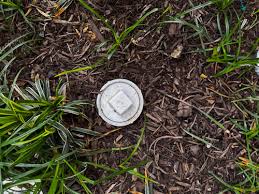
If you are trying to find the sewer cleanout at your Plano, Texas home, start near the front yard, side yard, flower bed, foundation wall, driveway edge, or the area where the main sewer line leaves the house. In most cases, the cleanout is the preferred place to run a sewer camera inspection.
Need Help Finding Your Sewer Cleanout?
We provide sewer camera inspections in Plano, TX and handle all plumbing emergencies 24/7.
Call Now: 972-333-5448One of the first questions homeowners ask before a sewer camera inspection is simple:
Where is the cleanout at my Plano, Texas home?
The second question is just as important:
Is that where the sewer camera inspection is done?
In most cases, yes.
The sewer cleanout is usually the best access point for a sewer camera inspection because it allows the camera to enter the main sewer line without removing a toilet or disturbing interior plumbing fixtures.
But not every home has an easy-to-find cleanout.
Some cleanouts are visible.
Some are buried under mulch, grass, landscaping, gravel, or dirt.
Some are located in the front yard.
Some are on the side of the house.
Some are near the driveway.
Some are in the flower bed close to the foundation.
Some older homes may not have an accessible exterior cleanout at all.
That is why The Sewer Inspection Company helps homeowners, homebuyers, sellers, real estate agents, and property managers locate sewer access points and inspect the sewer line before major plumbing decisions are made.
We serve Plano, Allen, McKinney, Richardson, Frisco, North Dallas, Carrollton, Addison, Murphy, Parker, Fairview, Lucas, and nearby Collin County areas.
We also handle all plumbing emergencies 24/7.
What is a sewer cleanout?
A sewer cleanout is an access point into the sewer or drain line.
It usually has a removable cap or plug.
The cap may be round, square, threaded, plastic, metal, white, black, green, brass, or cast iron depending on the age and type of plumbing system.
In many Plano homes, the cleanout is a 3-inch or 4-inch pipe with a cap near the exterior of the home.
The purpose of the cleanout is to provide access to the drain or sewer line for cleaning, inspection, locating, and maintenance.
When there is a clog, backup, sewer smell, slow drain issue, or home purchase inspection, the cleanout is often the first place a plumber looks.
The cleanout is usually the preferred access point for a sewer camera inspection.
Where is the sewer cleanout at my Plano home?
Every home is different, but there are common places to look.
At a Plano, Texas home, the sewer cleanout may be located:
- In the front yard near the foundation
- In the flower bed near the front of the home
- On the side yard near a bathroom wall
- Near the kitchen, laundry room, or bathroom plumbing wall
- Near the driveway or walkway
- Near the garage exterior wall
- Near the area where the main sewer line exits the home
- Close to the city sewer direction, street, curb, alley, or easement
- Under a round green irrigation-style cover
- Under mulch, dirt, grass, gravel, or landscaping
- In a box or sleeve near the home
- Inside the garage or utility area in some layouts
The cleanout is often close to where the main sewer line leaves the house.
In some neighborhoods, the sewer may run toward the street.
In other neighborhoods, the sewer may run toward an alley or rear utility easement.
That direction matters because the cleanout is often installed along the path of the sewer line.
What does a sewer cleanout look like?
A sewer cleanout may look like:
- A white PVC cap sticking out of the ground
- A black ABS cap or plug
- A brass plug in a cast iron fitting
- A round cap close to the foundation
- A flush cap at ground level
- A raised pipe with a threaded cap
- A double cleanout with two caps next to each other
- A cleanout hidden under a green yard box
- A cleanout buried under mulch or soil
Some cleanouts are obvious.
Others are not.
If you do not see the cleanout right away, do not assume the home does not have one.
It may be buried or hidden by landscaping.
Is the sewer camera inspection done through the cleanout?
Most of the time, yes.
The cleanout is normally the best place to insert the sewer camera.
A sewer scope inspection is commonly performed from a proper cleanout or other approved access point, and the purpose is to video-record the sewer line when access allows it.[1]
When the cleanout is accessible, the plumber can usually remove the cap, insert the camera, and inspect the main sewer line.
This allows the plumber to look for:
- Roots
- Standing water
- Sewer bellies
- Offset joints
- Separated fittings
- Broken pipe
- Cracked pipe
- Collapsed pipe
- Cast iron deterioration
- Clay pipe separation
- Grease buildup
- Sludge
- Improper slope
- Flow restrictions
The camera inspection helps show what is happening inside the line.
That is especially important before buying a home, approving a sewer repair, or assuming a clog is only a simple drain issue.
Does every cleanout let the plumber inspect the whole sewer line?
No.
This is important.
A cleanout is an access point, but the amount of pipe that can be inspected depends on how the cleanout is installed and which direction the camera can travel.
Some cleanouts allow the camera to go toward the city sewer connection.
Some allow the camera to go back toward the home.
Some double cleanouts allow access in both directions.
Some older or poorly installed cleanouts may only provide limited access.
Some cleanouts are too small, damaged, blocked, buried, or inaccessible.
That is why a proper inspection should explain what was inspected and what was not inspected.
If the camera cannot access part of the line, the homeowner should know that.
What is a double cleanout?
A double cleanout usually has two cleanout caps next to each other.
One side may provide access toward the house.
The other side may provide access toward the city sewer line.
This can be helpful for sewer camera inspections and drain cleaning because it may allow the plumber to inspect or clean in more than one direction.
A double cleanout is not present at every home.
But when it is installed correctly and accessible, it can be one of the best access points for sewer inspection work.
What if my Plano home does not have a visible cleanout?
If you cannot find the cleanout, there are several possibilities.
- The cleanout may be buried under soil
- The cleanout may be covered by mulch
- The cleanout may be hidden by landscaping
- The cleanout may be below grass level
- The cleanout may be under a decorative rock bed
- The cleanout may be inside a yard box
- The cleanout may be on the side or back of the home
- The cleanout may be in the garage or utility area
- The home may not have an accessible exterior cleanout
- The cleanout may be damaged or capped over incorrectly
Do not start digging randomly.
Do not remove random caps if you are not sure what they are.
Do not confuse irrigation boxes, gas line covers, water meter boxes, or electrical covers with sewer cleanouts.
A licensed plumber can usually help identify the correct access point.
Can a sewer camera inspection be done if there is no cleanout?
Sometimes, yes.
If there is no accessible exterior cleanout, another access point may be needed.
Possible alternative access points may include:
- Pulling a toilet
- Using a roof vent in limited situations
- Using an interior cleanout if present
- Using a branch cleanout if it provides proper access
- Installing a new cleanout when needed
Pulling a toilet is common when no usable cleanout is available.
At The Sewer Inspection Company, the standard sewer camera inspection is $189.
If a toilet must be removed because there is no usable cleanout, a $50 toilet removal add-on may apply.
Current Sewer Inspection Pricing
Standard sewer camera inspection: $189
Toilet removal add-on if no cleanout is available: $50
Typical total if toilet removal is needed: about $239
Should I install a cleanout if my home does not have one?
Sometimes, yes.
An accessible cleanout can make future sewer camera inspections, drain cleaning, maintenance, and emergency service easier.
If the main sewer line backs up and there is no exterior cleanout, the plumber may need to access the line from inside the home.
That can be more disruptive.
An exterior cleanout may reduce the need to remove a toilet during future inspections or stoppage calls.
Whether a new cleanout makes sense depends on the home, pipe location, depth, access, and condition of the existing sewer line.
If the cleanout installation involves excavation or plumbing alteration, permit and inspection requirements may apply. The City of Plano provides building inspection and permit resources for property work in Plano.[3]
Why finding the cleanout matters before buying a home
If you are buying a home in Plano, finding the cleanout matters.
The cleanout tells you where the sewer line may be accessed.
It also helps determine how the sewer camera inspection will be performed.
Before closing, buyers should ask:
- Where is the sewer cleanout?
- Is the cleanout accessible?
- Is there a single cleanout or double cleanout?
- Can the camera inspect toward the city sewer?
- Can the camera inspect back toward the house?
- Was the entire accessible sewer line inspected?
- Was any part of the line not accessible?
- Was toilet removal required?
- Was the line located if a defect was found?
- Was a video link or report provided?
If the home inspector says the plumbing looked fine, that does not automatically prove the buried sewer line is in good condition.
A standard visual inspection may not include camera inspection of the buried sewer lateral by default.[2]
Why a cleanout is important during a sewer backup
A cleanout is not only useful for inspections.
It is also important during a sewer backup.
If multiple drains are backing up, the main sewer line may be restricted.
An accessible cleanout can allow the plumber to inspect or clear the line from outside the home.
This may reduce mess, reduce disruption, and help avoid bringing sewer equipment through the living space.
Call immediately if you notice:
- Multiple drains backing up
- Sewage backing up into a tub or shower
- Toilets gurgling
- Water coming up from a floor drain
- Cleanout overflowing outside
- Sewer smell inside the home
- Repeated main line stoppages
The Sewer Inspection Company handles all plumbing emergencies 24/7.
Common Plano sewer line issues found from cleanout inspections
Once the camera is inserted through the cleanout, common Plano sewer line problems may include:
- Tree roots growing into pipe joints
- Standing water in low spots
- Pipe bellies caused by soil movement
- Cast iron deterioration
- Clay pipe separation
- PVC pipe settlement
- Broken pipe near the yard or foundation
- Grease buildup from kitchen use
- Offset joints
- Poor slope
- Previous repairs that were not verified by camera
The camera does not fix the problem by itself.
But it gives the homeowner evidence.
That evidence helps determine whether the next step is monitoring, drain cleaning, hydro jetting, spot repair, cleanout installation, sewer line replacement, or further testing.
What not to do when looking for a cleanout
Homeowners should be careful when trying to locate a cleanout.
Do not:
- Force open a cap that may break
- Remove a cap if you are not sure what it is
- Dig aggressively around utility areas
- Confuse irrigation boxes with sewer cleanouts
- Run a garden hose into unknown openings
- Assume every pipe cap is a sewer cleanout
- Ignore sewer smell around a cleanout
- Ignore a cleanout that is overflowing
If a cleanout is overflowing, there may be an active sewer blockage.
That should be treated as an urgent plumbing issue.
How The Sewer Inspection Company handles cleanout access
Here is how we approach sewer camera inspections at Plano homes.
Step 1: Look for the sewer cleanout
We look for the best access point near the exterior of the home, foundation, side yard, front yard, driveway, flower bed, or sewer path.
Step 2: Confirm whether the cleanout is usable
Not every cleanout is usable. The cap may be damaged, buried, blocked, too small, inaccessible, or facing the wrong direction for the inspection goal.
Step 3: Run the sewer camera
If the cleanout is usable, we insert the camera and inspect the accessible portions of the sewer line.
Step 4: Identify the findings
We look for roots, standing water, bellies, offsets, separations, cracked pipe, collapsed pipe, cast iron deterioration, grease, sludge, and poor slope.
Step 5: Explain what was inspected
A good sewer inspection should explain what the camera could see, what direction it traveled, and whether any parts of the line were not accessible.
Step 6: Provide next-step options
Sometimes the right answer is no repair. Sometimes it is drain cleaning, hydro jetting, cleanout installation, spot repair, sewer line replacement, or further testing. The recommendation should match the evidence.
Why a Texas Licensed Master Plumber and RMP matters
Finding a cleanout is one thing.
Understanding what the sewer camera shows is another.
A camera is only a tool.
The value comes from the person interpreting the video.
A Responsible Master Plumber is responsible for the general supervision and management of plumbing work performed under contracts secured under that license, including necessary permits, inspections, licensed or registered workers, and required supervision.[4]
Steven Shipler is a Texas Licensed Master Plumber, Responsible Master Plumber (RMP), MBA, and host of The 4 Guys Education on YouTube.
That experience matters when a homeowner or buyer is trying to understand whether a sewer line issue is minor, serious, negotiable, or urgent.
Local trust matters
The Sewer Inspection Company serves Plano, Allen, McKinney, Richardson, Frisco, North Dallas, Carrollton, Addison, Murphy, Parker, Fairview, Lucas, and nearby Collin County / North Dallas areas.
Our approach is simple:
- Find the best access point
- Use the cleanout when available
- Camera inspect when needed
- Explain what was inspected
- No scare tactics
- No fake urgency
- No sewer repair recommendation unless the inspection supports it
- Texas Licensed Master Plumber review
- Responsible Master Plumber accountability
- 24/7 emergency response
Watch The 4 Guys Education on YouTube
Want to understand what plumbers look for before you buy a home or approve a sewer repair?
Watch The 4 Guys Education on YouTube, hosted by Steven Shipler, Texas Licensed Master Plumber, Responsible Master Plumber (RMP), and MBA.
Watch The 4 Guys Education on YouTube
Need a Sewer Camera Inspection in Plano?
The cleanout is usually the best access point for the sewer camera.
Schedule a $189 sewer camera inspection with The Sewer Inspection Company.
Call Now: 972-333-5448We handle all plumbing emergencies 24/7.
Final answer: yes, the cleanout is usually where the sewer camera inspection is done
If your Plano home has an accessible sewer cleanout, that is usually the preferred place to perform the sewer camera inspection.
The cleanout may be in the front yard, side yard, flower bed, near the foundation, near the driveway, near the garage wall, or along the path where the sewer line leaves the home.
If the cleanout is not visible, it may be buried, hidden, damaged, or missing.
If there is no usable cleanout, the sewer camera inspection may require another access point, such as pulling a toilet.
Do not guess.
Find the right access point, inspect the line, and understand what is happening inside the pipe before approving major sewer work or buying the home.
Call The Sewer Inspection Company today at 972-333-5448.
FAQs
Where is the sewer cleanout at my Plano home?
The cleanout is often located near the front yard, side yard, flower bed, foundation wall, driveway edge, garage exterior wall, or along the path where the sewer line leaves the home. Some cleanouts are buried or hidden by landscaping.
Is the sewer camera inspection done through the cleanout?
Usually, yes. The sewer cleanout is normally the preferred access point for a sewer camera inspection because it allows the camera to enter the main sewer line without removing a toilet.
What if I cannot find my sewer cleanout?
The cleanout may be buried, hidden under mulch, covered by grass, located on the side or back of the home, inside a yard box, or missing. A licensed plumber can help identify the correct access point.
Can a sewer camera inspection be done without a cleanout?
Sometimes, yes. If there is no usable cleanout, the camera may need to be run through another access point. In some cases, a toilet must be removed to access the line.
How much does a sewer camera inspection cost?
The Sewer Inspection Company currently charges $189 for a standard sewer camera inspection. If a toilet must be removed because there is no usable cleanout, a $50 add-on may apply.
What does a sewer camera inspection show?
A sewer camera inspection can show roots, standing water, bellies, offsets, separated fittings, broken pipe, collapsed pipe, cast iron deterioration, grease buildup, sludge, and other restrictions.
Do you handle emergency sewer backups?
Yes. The Sewer Inspection Company handles all plumbing emergencies 24/7. Call 972-333-5448 for emergency sewer or drain help.
What areas do you serve?
The Sewer Inspection Company serves Plano, Allen, McKinney, Richardson, Frisco, North Dallas, Carrollton, Addison, Murphy, Parker, Fairview, Lucas, and nearby Collin County areas.
Sources
These sources are provided for homeowner education and to support the information discussed in this article.
- InterNACHI — Sewer Scope Inspection Standards of Practice: https://www.nachi.org/sewer-scope-sop.htm
- Texas Real Estate Commission — Real Estate Inspector Standards of Practice: https://www.trec.texas.gov/online-sops
- City of Plano — Building Inspections and Permits: https://www.plano.gov/350/Building-Inspections-Permits
-
Texas State Board of Plumbing Examiners — Responsible Master Plumber:
Responsible Master Plumber
- Google Search Central — Local Business Structured Data: https://developers.google.com/search/docs/appearance/structured-data/local-business
- Schema.org — Plumber Schema Type: https://schema.org/Plumber
https://shorturl.fm/6xWuE