
The Sewer Inspection Company Case Study
Seller Said the Sewer Line Was Replaced—But Old Cast Iron Sections Were Still Collapsing
Written by Steven Shipler, Texas Licensed Master Plumber, Responsible Master Plumber, MBA, Texas License #45825.
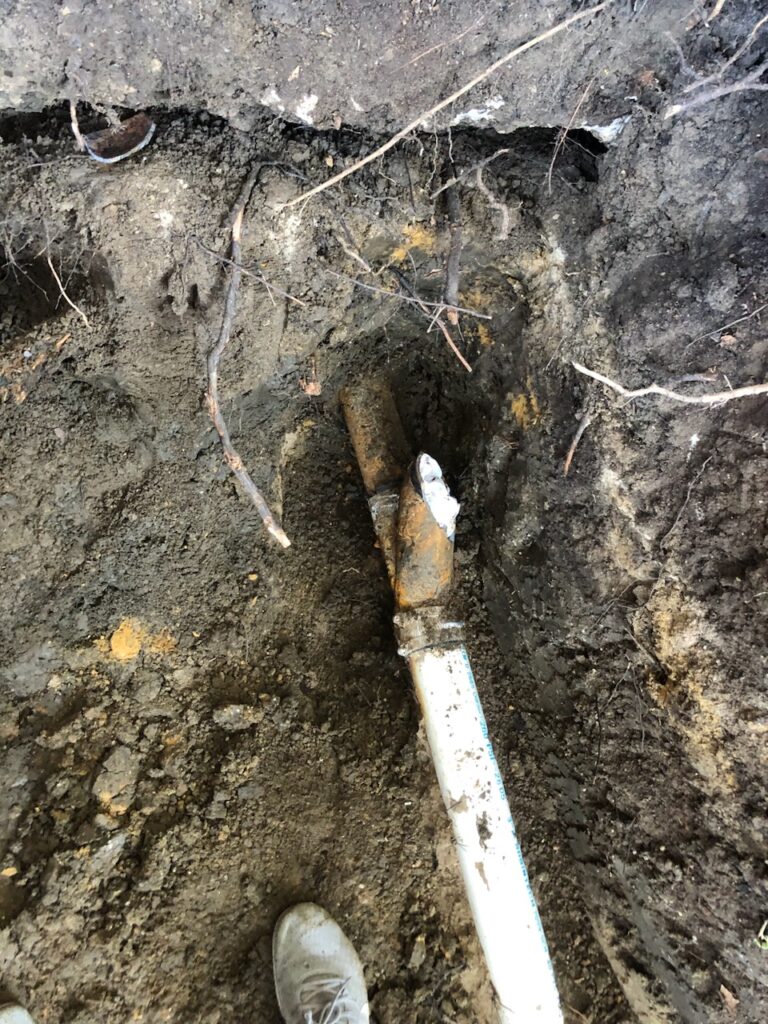
The buyer was told that the sewer line had already been replaced. That statement was partly true. New pipe had been installed in several sections, but portions of the original cast iron sewer system were still left beneath the home. After foundation work lifted and adjusted the house, the weakened cast iron sections began collapsing.
A Critical Home-Buyer Discovery
“The Sewer Line Was Replaced” Did Not Mean the Entire Sewer Line Was Replaced
A sewer scope and line camera inspection revealed that older cast iron pipe remained between the newer replacement sections. Those hidden sections were deteriorated and collapsing.
Schedule a Sewer Inspection: 972-333-5448A receipt for sewer work does not prove that every section of old pipe was replaced. Only a complete sewer camera inspection can show what is actually still underground.
The Seller’s Representation
Before the purchase, the buyer was told that the sewer line had been replaced. From the buyer’s perspective, this sounded reassuring. Sewer line replacement can be expensive, disruptive, and difficult to evaluate from the surface.
The yard looked normal. The home had already undergone plumbing and foundation-related work. There were visible sections of newer pipe, and there may have been invoices or discussions suggesting that the sewer problem had been corrected.
The problem was that the statement was incomplete.
The sewer line had been replaced only in sections.
Portions of the original cast iron drainage system were still connected between the newer sections. Those remaining cast iron pipes were hidden under the slab and could not be evaluated by looking at the yard, cleanout, plumbing fixtures, or repair paperwork alone.
What a Partial Sewer Line Replacement Means
A partial sewer line replacement removes and replaces only selected sections of the drainage system. This may be appropriate when the damage is limited to a specific area and the remaining pipe is still in acceptable condition.
However, a partial replacement can create a false sense of security when older pipe remains under the home.
The completed system may contain a combination of:
- New PVC sewer pipe
- Older cast iron pipe
- Transition couplings
- Previously repaired fittings
- Original under-slab branch lines
- Sections with different ages and conditions
One section may be new and functioning correctly while an older section only a few feet away is cracked, scaled, separated, holding water, or collapsing.
The Important Question
Was the entire sewer system replaced, or were only the known damaged sections replaced?
“`The Remaining Cast Iron Pipe
Cast iron sewer piping was commonly installed beneath older homes. It can last for decades, but it does not last forever.
Over time, cast iron may develop:
- Internal scaling
- Rust and corrosion
- Thinning pipe walls
- Bottom-channel deterioration
- Cracks
- Separated joints
- Rough interior surfaces that collect debris
- Collapsed or partially collapsed sections
In this case, older cast iron pipe remained between the newer replacement sections. The remaining pipe had not been removed as part of the previous sewer repair.
The newer pipe did not protect the older cast iron from deterioration or movement. The sewer system was only as reliable as the weakest section that remained.
Foundation Work Changed the Underground Conditions
After the sewer repairs were performed, foundation work was completed on the home. The structure was lifted and adjusted.
Foundation movement can affect underground sewer piping because the drainage system may be connected to fixtures, fittings, vertical stacks, and branch lines beneath the slab.
When a house is lifted, weakened or rigid pipe may be subjected to movement, changes in alignment, additional stress, or changes in slope.
Newer PVC piping may tolerate some movement differently than old, brittle, deteriorated cast iron. In this home, the older cast iron sections that remained were already vulnerable. When the house was lifted, those remaining sections began collapsing.
Foundation repair may improve the structure above ground while exposing or worsening weaknesses in old sewer piping below the slab.
“`What the Sewer Scope Revealed
The sewer scope inspection was performed by inserting a professional sewer camera into the drainage system and advancing it through the underground pipe.
The camera revealed that:
- The sewer line had not been completely replaced
- Newer pipe was installed only in selected sections
- Original cast iron pipe remained under the home
- The remaining cast iron was deteriorated
- Sections of the pipe were beginning to collapse
- The transition between new and old piping required evaluation
- The foundation work had affected the remaining vulnerable pipe
- A significant repair was still necessary
None of these facts could be confirmed from the surface.
The toilets may still have flushed. The sinks may still have drained. The seller may have honestly believed the sewer issue had been corrected. But normal fixture operation did not prove that the underground sewer system was structurally sound.
Why the New Sewer Sections Did Not Tell the Whole Story
Seeing new PVC near a cleanout or repair trench does not prove that the entire sewer line is new.
New pipe may have been installed:
- From the house to the city connection
- Only in the front yard
- Only beneath one bathroom
- Only at a previous break
- Only where access was easiest
- Only between two excavation points
- Only around the perimeter of the home
Older branch lines or under-slab sections may remain connected inside the home.
This is why a buyer should not rely only on the phrase “the sewer line was replaced.” The buyer should ask what was replaced, where it was replaced, how much old pipe remains, and whether the completed system was camera inspected after the work.
The Risk to the Buyer
Without the sewer line inspection, the buyer could have completed the purchase believing that the home had a fully replaced sewer system.
After closing, the remaining cast iron could have continued collapsing and caused:
- Repeated sewer backups
- Slow drains
- Toilet stoppages
- Standing water inside the pipe
- Sewage release beneath the slab
- Concrete cutting
- Interior flooring removal
- Tunneling beneath the foundation
- Excavation and soil removal
- Additional sewer line replacement
- Permits and city inspections
- Major unexpected repair costs
This was not a minor drain-cleaning problem. It was a hidden structural failure in the underground sewer system.
The Sewer Inspection Protected the Buyer
The camera inspection gave the buyer evidence before closing. Instead of unknowingly inheriting a major collapsed sewer-line repair, the buyer could evaluate the problem, obtain estimates, negotiate, request repairs, or reconsider the purchase.
Call 972-333-5448 “`Partial Replacement vs. Complete Replacement
| Repair Description | What It Usually Means | Buyer Concern |
|---|---|---|
| Spot repair | One isolated damaged section was replaced | Older pipe remains before and after the repair |
| Partial replacement | Several sections were replaced | Original cast iron or clay pipe may still remain |
| Exterior replacement | The yard line was replaced | Under-slab building drains may still be old |
| Complete replacement | The full identified sewer path was replaced | Still verify workmanship, slope, fittings, and transitions |
Questions Buyers Should Ask About Previous Sewer Repairs
- Was the entire sewer system replaced or only part of it?
- Which fixtures and branches were included?
- Was the under-slab piping replaced?
- Was only the exterior yard line replaced?
- Does any original cast iron remain?
- Does any original clay pipe remain?
- Where are the transitions between old and new pipe?
- Was a permit obtained?
- Was the repair inspected by the city?
- Was the completed line camera inspected?
- Was the sewer tested after foundation work?
- Is there video documentation of the entire accessible system?
- Is there a diagram showing what was replaced?
- Is the repair warranty transferable?
Why Sewer Lines Should Be Inspected After Foundation Repair
Foundation work can change the elevation and alignment of plumbing beneath a home.
Even when the foundation repair is successful, the plumbing should be evaluated because movement may affect:
- Pipe slope
- Cast iron joints
- PVC connections
- Transitions between old and new pipe
- Toilet branches
- Kitchen and laundry drain lines
- Vertical stack connections
- Previously weakened pipe
A sewer camera inspection after foundation work may reveal standing water, offsets, cracking, separations, damaged transitions, or collapsed pipe.
Foundation repair should be followed by plumbing evaluation when there is old cast iron, known sewer history, partial replacement, or evidence of underground drainage problems.
“`What a Sewer Camera Inspection Can Document
A professional sewer scope may help document:
- Pipe material
- Transitions from PVC to cast iron
- Approximate locations of repairs
- Standing water
- Improper slope
- Cracks
- Collapsed pipe
- Offsets
- Separated joints
- Root intrusion
- Cast iron scaling
- Bottom deterioration
- Debris and restrictions
- Evidence of previous incomplete repairs
The inspection does not rely on verbal representations. It provides visual evidence from inside the pipe.
Why a Master Plumber Report Matters
Video alone is not enough if the person reviewing it cannot correctly identify pipe materials, defects, fittings, transitions, slope issues, or the likely repair implications.
Every inspection from The Sewer Inspection Company is reviewed through the experience of Steven Shipler:
- Texas Licensed Master Plumber
- Responsible Master Plumber
- Texas License #45825
- MBA
- Experienced in sewer inspection, diagnosis, replacement, and repair planning
The buyer receives a certified Master Plumber Report explaining the visible conditions, significant findings, and recommended next steps.
The Lesson From This Case Study
The seller’s statement was not completely false. Sections of the sewer line had been replaced.
But it was not the complete story.
Older cast iron remained under the home. That pipe weakened and began collapsing after foundation work lifted the house.
Without a sewer camera inspection, the buyer could have inherited a major underground sewer repair immediately after purchasing the home.
“`Frequently Asked Questions
Does “sewer line replaced” always mean the entire line was replaced?
No. It may mean that only one damaged section, the exterior yard line, or several isolated sections were replaced. Older under-slab pipe may still remain.
Can a camera inspection identify old cast iron pipe?
Yes. A sewer camera may document changes in pipe material, transitions, cast iron scaling, corrosion, cracks, restrictions, and collapsed sections when the line is accessible.
Can foundation repair damage a sewer line?
Foundation movement can affect pipe slope, fittings, joints, transitions, and weakened sewer piping beneath the slab. Older cast iron may be particularly vulnerable when it is already deteriorated.
Should buyers inspect a sewer line that was previously repaired?
Yes. A previous repair does not prove that the entire system was replaced or that the remaining pipe is in good condition. A camera inspection helps verify the accessible underground system.
What should a buyer request after a sewer scope?
The buyer should request the inspection video, significant defect locations, pipe-material information, approximate depth when located, repair recommendations, and a written Master Plumber Report.
Never Accept “The Sewer Was Replaced” Without Verification
Inspect the entire accessible sewer line before buying. Confirm which sections are new, which sections are original, and whether old cast iron remains beneath the home.
Call The Sewer Inspection Company972-333-5448 — Know What’s Underground, Before You Buy.
“`