
Practical answer: A sewer camera pipe transition marks a change in material, diameter, direction, or repair history. The transition itself is not automatically defective. The useful question is whether the visible joint stays aligned, open, and free of intrusion or recurring deposits.
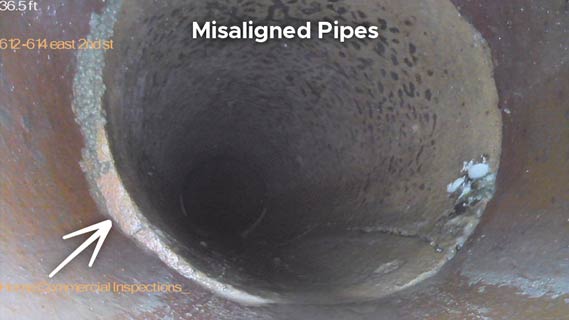
A sewer camera pipe transition needs context
Common transitions include cast iron to PVC, clay to PVC, or one pipe diameter meeting another. Color and texture can suggest a material, yet the image alone may not prove every buried component. Steven Shipler documents what the camera actually shows and separates observation from inference.
Look at alignment, not just the material name
A centered opening with a smooth path can look very different from a joint with a ledge, gap, root entry, or displaced edge. Water movement, deposits, and camera angle also affect the picture. Therefore, the narrator should describe the visible geometry before assigning significance.
Use three equipment references together
The V-SCOPE self-leveling camera supplies the interior image, its distance counter adds travel context, and the camera-head sonde works with a surface receiver for an estimated position and depth. These three references help connect a buried transition to the property without presenting the locate as a survey.
Why access direction can change the view
A transition may look different when approached from the house instead of the yard cleanout. A safe second access can clarify the upstream and downstream edges. Homes in Plano, Richardson, and Allen can have different cleanout layouts, so the report must name the actual access and travel direction.
What a Certified Master Plumber Report should state
A useful report identifies the access point, direction, footage, visible materials, alignment, deposits, limitations, and locate result when obtained. Steven Shipler, Texas Responsible Master Plumber #45825, prepares the Certified Master Plumber Report so the client can distinguish visible evidence from an unverified assumption.
When the transition deserves follow-up
Follow-up may be reasonable when the image shows a reduced opening, displaced joint, roots, debris accumulation, or an uninspected section beyond the transition. The sewer inspection documents the condition; a repair contractor determines the work method and price.
Local plumbing-code references
Local code adoption applies to installation and repair work; a sewer camera inspection documents visible conditions and does not certify code compliance. The City of Plano’s official code page currently lists its 2024 codes as effective August 1. City of Dallas Ordinance 32422 adopted the 2021 International Plumbing Code with Dallas amendments and states an effective date of May 12, 2023. These are different jurisdictions and editions; neither reference applies automatically to another city.
Related sewer-inspection resources
Seven field-video examples
These field videos show why access, narration, footage, locating, and stated limitations matter. Each property requires its own evidence.
Dallas–Fort Worth service area
Appointments are available across the DFW area, including Plano, Richardson, Allen, Frisco, Dallas, Garland, and nearby communities.
Frequently asked questions
Does every material transition mean a previous repair?
No. A transition can reflect original construction, a later repair, an addition, or the connection between private and public piping. The scope cannot date buried work by appearance alone.
Can the camera identify cast iron, clay, and PVC?
Often the visible texture and color provide clues, but deposits, water, lighting, and limited footage can reduce certainty. The report should state whether the material is observed or only appears consistent with a material.
Is a small offset at a transition a defect?
Not automatically. The visible opening, alignment, water behavior, debris, and local requirements all matter. A camera inspection documents the condition but does not certify code compliance.
Can roots enter at a pipe transition?
Yes, roots can enter through an opening or failed joint where conditions permit. The camera can document visible roots, but it cannot show every exterior cause.
Why does debris collect near some transitions?
A ledge, change in diameter, surface roughness, or low area can slow solids. One image should be interpreted with the surrounding footage and flow conditions.
Can the transition be located from the surface?
If the sonde signal is usable, the receiver can estimate the camera head’s position and depth near the transition.
Can a transition hide damage just beyond it?
Yes. A turn, restriction, water, or poor access can limit the view. The report should identify any section the camera did not inspect.
Should a buyer ask for repair records?
If a visible transition suggests prior work, available permits, invoices, or seller documents may add useful history. The camera footage remains a record of the accessible interior on inspection day.
Is a sewer scope inspection really necessary?
It is especially useful when a purchase, remodel, drainage concern, or uncertain sewer history makes the accessible building sewer important. The scope supplies evidence about visible conditions; it does not guarantee that every concealed defect will appear.
How long does a sewer scope inspection take?
Access, pipe length, restrictions, water, deposits, and findings affect the time. A careful inspection should document important locations and limitations instead of rushing through the line.
Will I receive a video of the inspection?
Yes. The standard V-SCOPE service includes a narrated video that connects visible conditions to the direction of travel, distance, and access point.
Can a sewer scope detect all problems?
No. The camera shows the accessible pipe interior at the time of inspection. Water, debris, sharp turns, inaccessible branches, or a blocked passage can limit visibility.
What happens if problems are found?
The report documents the visible condition. When appropriate, the camera-head sonde and surface receiver can mark an area and estimate depth. The Certified Master Plumber Report helps the client discuss next steps with a repair professional.
Is this service included in a standard home inspection?
Usually not. A general home inspection commonly does not include pushing specialized camera equipment through the building sewer. Confirm the written scope of every service.
How much can sewer repairs cost?
Repair costs vary widely with location, depth, access, pipe material, length, damage, and restoration. The $239 inspection is not a repair quote; documented evidence helps a contractor price the actual condition.
Book a documented V-SCOPE sewer inspection
The standard inspection price is $239. Call 972-333-5448 or choose a time below.
Know What’s Underground, Before You Buy.