Sewer Camera Inspection & Sewer Line Inspection in Dallas-Fort Worth
Know What’s Underground, Before You Buy.
If you are buying a home, selling a property, managing a rental, or dealing with repeated drain problems, a sewer camera inspection can save you from expensive surprises. The main sewer line is underground, and a normal walk-through inspection will not show you what is happening inside the pipe.
The Sewer Inspection Company provides professional sewer camera inspection and sewer line inspection services across Dallas-Fort Worth. We inspect the sewer lateral, document the condition of the pipe, identify visible defects, and provide clear findings so you can make a better decision before buying, selling, repairing, or negotiating a property.
Our goal is simple: show you what is underground before it becomes your problem.
Watch: Sewer Camera Inspection & Sewer Line Inspection in Dallas-Fort Worth
This video shows why a professional sewer camera inspection matters before buying, selling, or repairing a property.
Narrated Sewer Camera Inspection Video
Click the video thumbnail below to play the sewer inspection video.
More Than a Sewer Camera Video
The Sewer Inspection Company does more than run a camera through the sewer line. We narrate the sewer inspection video so the customer, buyer, seller, realtor, or investor can understand what they are seeing inside the pipe.
We also prepare a certified sewer inspection report based on the video findings. The inspection, video explanation, and written report are completed by a Licensed Master Plumber.
This matters because a raw sewer camera video without explanation can be confusing. Most customers do not know what a sewer belly, offset, pipe separation, root intrusion, standing water, or city tap problem looks like on video.
With The Sewer Inspection Company, you receive a narrated sewer camera inspection, documented findings, and a professional certified report you can use when buying, selling, negotiating, or planning sewer repairs.
Dallas-Fort Worth Sewer Camera Inspections
A sewer camera inspection helps identify hidden sewer line problems before they turn into major repairs.
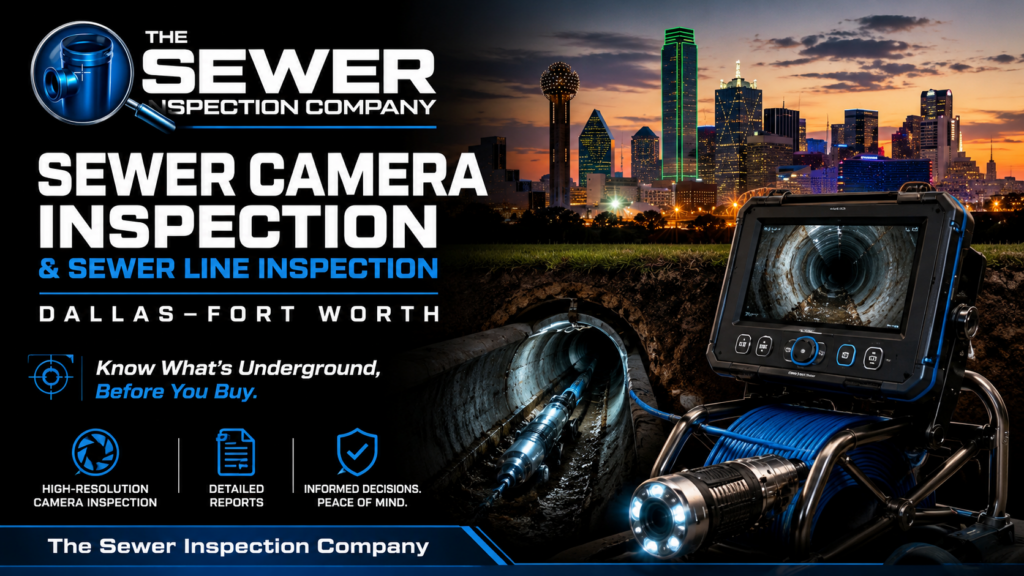
The Sewer Inspection Company provides sewer camera inspection, sewer line inspection, narrated video documentation, certified reports, and clear written findings across Dallas-Fort Worth.
What Is a Sewer Camera Inspection?
A sewer camera inspection uses a professional video camera to inspect the inside of the sewer line from an accessible cleanout or drain access point. The camera allows us to see defects, standing water, roots, offsets, pipe separations, bellies, blockages, and other conditions that cannot be seen from above ground.
Why Sewer Line Inspections Matter in Dallas-Fort Worth
Dallas-Fort Worth has a mix of older homes, newer subdivisions, clay soil, large trees, shifting foundations, aging cast iron pipe, clay sewer lines, PVC repairs, and long sewer laterals running under yards, driveways, sidewalks, and landscaping.
That means sewer lines can have problems even when the home looks clean, remodeled, and move-in ready. A beautiful house can still have a sewer lateral holding water, full of roots, separated at the joints, sagging under the yard, or damaged near the city tap.
A sewer line inspection gives buyers, sellers, realtors, investors, and homeowners a better understanding of the actual underground condition of the property.
Who Should Get a Sewer Camera Inspection?
A sewer camera inspection is especially important for:
- Home buyers before closing
- Realtors representing buyers or sellers
- Real estate investors
- Airbnb and VRBO property owners
- Property managers
- Commercial property buyers
- Owners of older homes
- Homes with large mature trees
- Homes with cast iron sewer lines
- Homes with repeated drain cleaning calls
- Homes with foundation movement or prior foundation repair
- Properties with sewer lines running under driveways, patios, or landscaping
If you are buying a property in Dallas-Fort Worth, the sewer line should not be a mystery. It should be inspected before you inherit the problem.
What We Look for During a Sewer Line Inspection
During a sewer camera inspection, we carefully watch the condition of the pipe from the access point toward the city tap or other accessible direction. We are looking for defects that affect flow, structure, serviceability, and future repair risk.
Common issues we identify include:
- Sewer bellies
- Standing water
- Root intrusion
- Pipe offsets
- Pipe separations
- Broken sewer pipe
- Cracked pipe
- Collapsed pipe
- Cast iron deterioration
- Clay pipe joint problems
- PVC pipe sagging or improper slope
- Improper fittings or bad transitions
- Blockages and debris buildup
- Cleanout problems
- City tap concerns
Why Cleanouts and Code-Compliant Access Matter
A sewer camera inspection depends on proper access. Cleanouts are important because they allow the camera to enter the sewer lateral safely and directly. They also make future drain cleaning, locating, hydro jetting, and follow-up inspections easier.
Plumbing codes address cleanouts, sanitary drainage, building sewers, drainage fittings, piping installation, grade, slope, and testing. The exact requirements depend on the code adopted by the local city or authority having jurisdiction.
In Dallas-Fort Worth, different cities may adopt different versions of the plumbing code or add local amendments. That is why sewer inspections and sewer repairs should be reviewed by someone who understands both the field conditions and the adopted plumbing code.
What You Receive from The Sewer Inspection Company
Our sewer camera inspections are designed to be clear, useful, and easy to understand.
Depending on the inspection and access, you may receive:
- Sewer camera inspection of accessible sewer line sections
- Narrated sewer inspection video
- YouTube video link when applicable
- Certified sewer inspection report
- Written findings prepared by a Licensed Master Plumber
- Photos when needed
- Defect locations by footage when visible
- Plain-English explanation of what was found
- Repair recommendations when defects are observed
- Master Plumber review
This is the difference between simply receiving a video and receiving a professional sewer inspection package. A narrated video and certified report help you understand the risk, the repair need, and the next step.
Sewer Bellies and Standing Water
One of the most common problems we find is a sewer belly. A sewer belly is a low spot in the pipe where wastewater sits instead of draining completely. This usually means the pipe has settled, sagged, or lost proper slope.
A small amount of water near a fitting or cleanout may not always be a major concern. But when the camera stays underwater for several feet, that is a sign the sewer line is not maintaining proper grade.
Sewer bellies matter because the low section can collect waste, toilet paper, grease, sludge, and debris. Over time, that area can become a repeated blockage point.
Root Intrusion in Dallas-Fort Worth Sewer Lines
Tree roots are another major issue in sewer lines. Roots are attracted to moisture. If a sewer pipe has a crack, loose joint, separation, or failed connection, roots can enter the pipe and begin growing inside the line.
Once roots enter the pipe, they can catch toilet paper, waste, grease, and debris. A small root intrusion can become a major blockage over time.
During a sewer camera inspection, we document where roots are entering and how much of the pipe is affected.
Cast Iron Sewer Line Problems
Many older Dallas-Fort Worth homes still have cast iron drain and sewer piping. Cast iron can deteriorate from the inside out. The bottom of the pipe can become rough, thin, cracked, or completely rotted out.
Cast iron problems may show up as slow drains, recurring stoppages, sewer odor, rust flakes, rough pipe walls, missing pipe bottom, or standing water.
A sewer camera inspection helps document the visible condition of cast iron pipe so the buyer or owner understands whether the line is serviceable, failing, or in need of repair.
Offsets, Separations, and Bad Connections
An offset occurs when two pipe sections do not line up correctly. A separation occurs when pipe sections pull apart or have a gap between them. Both conditions can cause service problems.
Offsets and separations can catch debris, allow roots to enter, create leakage points, and restrict flow. They can also indicate soil movement, poor installation, pipe settlement, or failed previous repair work.
These defects are important because they are not always fixed by drain cleaning. The line may need repair if the defect is severe enough.
Buying a Home? Inspect the Sewer Line Before Closing
A sewer line repair can cost thousands of dollars. Some repairs require excavation, driveway removal, tunneling, crawl space work, landscaping removal, city permits, testing, and final inspection.
That is why a sewer line inspection is one of the smartest things a buyer can do before closing. You do not want to discover a major sewer problem after you own the house.
A sewer camera inspection gives you documented information that can be used for negotiation, repair planning, or peace of mind.
Sewer Camera Inspection vs. Sewer Line Inspection
People use both terms, and they often mean the same thing. A sewer camera inspection usually refers to the actual video camera inspection inside the sewer pipe. A sewer line inspection can refer to the full inspection process, including access points, pipe condition, video review, visible defects, and written findings.
At The Sewer Inspection Company, we use both terms because customers search for both. Whether you call it a sewer camera inspection or a sewer line inspection, the purpose is the same: see what is happening underground before you buy, sell, or repair.
Sewer Camera Inspection Service Areas in Dallas-Fort Worth
We provide sewer line inspection services across the Dallas-Fort Worth area, including:
- Dallas
- Fort Worth
- Irving
- Plano
- McKinney
- Frisco
- Richardson
- Garland
- Arlington
- Carrollton
- Lewisville
- Coppell
- Farmers Branch
- Addison
- Grapevine
- Flower Mound
- Southlake
- The Colony
- Allen
- Mesquite
- And surrounding DFW communities
Signs You May Need a Sewer Line Inspection
You should consider scheduling a sewer camera inspection if you notice:
- Repeated main line clogs
- Multiple drains backing up at once
- Toilets gurgling
- Sewer smell inside or outside the home
- Slow draining tubs, showers, or toilets
- Wet spots in the yard
- Large trees near the sewer line
- Foundation movement
- Older cast iron sewer pipe
- Buying a home without knowing the sewer condition
IPC and UPC Plumbing Code Reference Section
The following plumbing code links are provided as general reference material related to sanitary drainage, building sewers, cleanouts, drainage piping installation, pipe slope, access, testing, and code-approved sewer system requirements. Always verify the currently adopted code and local amendments with the authority having jurisdiction before performing plumbing work.
-
2024 International Plumbing Code — Chapter 7: Sanitary Drainage
Reference use: sanitary drainage system materials, building sewer provisions, drainage piping installation, slope, cleanouts, and related requirements. -
2021 International Plumbing Code — Chapter 7: Sanitary Drainage
Reference use: prior IPC sanitary drainage provisions often used by jurisdictions still operating under earlier adopted code cycles. -
2018 International Plumbing Code — Chapter 7: Sanitary Drainage
Reference use: sanitary drainage and cleanout requirements, including Section 708 cleanout provisions. -
2024 International Residential Code — Chapter 30: Sanitary Drainage
Reference use: residential sanitary drainage, cleanouts, and horizontal drainage piping slope. -
2024 IPC as Amended Example — Chapter 7: Sanitary Drainage
Reference use: example of amended IPC language showing sanitary drainage, building sewer cleanout, and drainage piping installation sections. -
2024 Uniform Plumbing Code — IAPMO Online Edition
Reference use: UPC sanitary drainage chapters, building sewers, cleanouts, drainage pipe sizing, slope, and related requirements. -
2021 Uniform Plumbing Code — IAPMO Online Edition
Reference use: prior UPC sanitary drainage and horizontal drainage piping provisions for jurisdictions using older adopted code cycles. -
IAPMO Uniform Plumbing Code Development Page
Reference use: official UPC code development information and Uniform Plumbing Code background. -
IAPMO Code Spotlight — Cleanouts
Reference use: UPC-related cleanout discussion, cleanout placement, access, and drainage maintenance considerations. -
IAPMO Code Spotlight — Drainage Pipe Slope and Building Sewer Sizing
Reference use: UPC-related discussion of building sewer sizing, fixture-unit loading, and drainage pipe slope considerations.
Important note: code references are educational only. Plumbing code requirements can change by state, city, amendment, code cycle, pipe material, pipe size, fixture-unit load, and inspection authority. The local authority having jurisdiction always controls the final requirement.
The Bottom Line
A sewer camera inspection is one of the best ways to protect yourself before buying, selling, or repairing a property. The sewer line is underground, but the risk is real. Know what is underground before you buy.
Schedule a Sewer Camera Inspection in Dallas-Fort Worth
The Sewer Inspection Company provides professional sewer camera inspection and sewer line inspection services throughout Dallas-Fort Worth. We help you understand the true condition of the sewer lateral with narrated video documentation, certified reports, and honest findings.
Need a Sewer Line Inspection?
Call The Sewer Inspection Company today.
Know What’s Underground, Before You Buy.
The Sewer Inspection Company
Phone: 972-333-5448
Website: www.TheSewerInspectionCompany.com