
Written by Steven Shipler, Texas Licensed Master Plumber, Responsible Master Plumber (RMP), MBA, and host of The 4 Guys Education on YouTube.
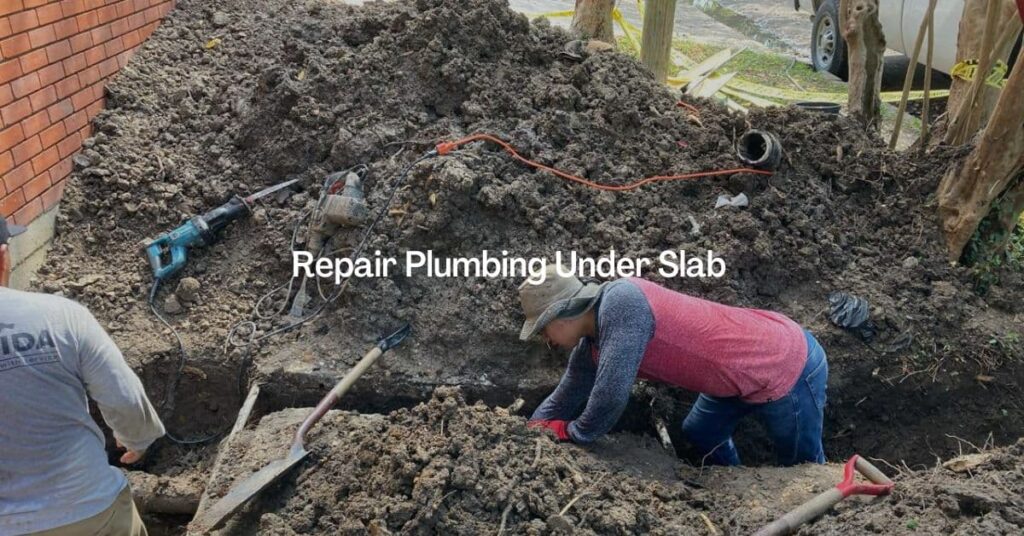
Has the home had foundation work? If you are buying a home in Plano, Allen, McKinney, Richardson, Frisco, or North Dallas, that question matters. Foundation movement and foundation repairs can affect sewer lines, drain lines, water lines, slope, pipe joints, and under-slab plumbing.
Buying a Home That Had Foundation Work?
Schedule a sewer camera inspection before closing.
Call Now: 972-333-5448One of the smartest questions a homebuyer can ask is simple:
Has the home had foundation work?
That question is not just about the foundation.
It is also about the plumbing under the house.
When a home has foundation movement, foundation lifting, foundation repair, pier installation, tunneling, slab adjustment, or major soil movement, the plumbing system may be affected.
The drains may still work.
The toilets may still flush.
The sinks may still drain.
But that does not prove the sewer line, drain line, or under-slab plumbing is in good condition.
That is why The Sewer Inspection Company recommends asking about foundation work before buying a home in Plano, Allen, McKinney, Richardson, Frisco, North Dallas, and surrounding Collin County areas.
If the home has had foundation work, a sewer camera inspection becomes even more important.
We also handle all plumbing emergencies 24/7.
Has the home had foundation work?
This is one of the most important plumbing-related questions a buyer can ask before closing.
Foundation work may include:
- Foundation repair
- Concrete slab lifting
- Pier installation
- Steel piers
- Concrete piers
- Drainage correction
- Soil stabilization
- Tunneling under the home
- Under-slab access work
- Foundation warranty work
- Post-repair elevation adjustments
Foundation repair may help correct structural movement.
But it does not automatically prove the plumbing survived the movement.
When the foundation moves, pipes can move too.
That is the issue.
Why foundation work matters to the plumbing system
Plumbing under a slab is not floating in open space.
It is surrounded by soil, concrete, trenches, bedding material, pipe supports, fittings, and penetrations through the slab.
If the slab moves, lifts, drops, settles, or shifts, the plumbing may be stressed.
That stress may affect:
- Sewer pipe slope
- Drain line slope
- Pipe joints
- Cast iron piping
- PVC pipe connections
- Clay pipe connections
- Water lines
- Hot water lines
- Cold water lines
- Under-slab branch lines
- Cleanout connections
- Pipe transitions from old material to new material
A sewer line depends on gravity.
If the pipe loses slope, develops a belly, separates at a joint, or drops out of grade, wastewater may not flow properly.
That can lead to recurring backups, standing water, sewer smells, slow drains, and expensive repairs.
Foundation work does not automatically mean the sewer line is damaged, but it is a major reason to inspect the line before closing.
Why a standard home inspection may not be enough
A standard home inspection is important.
But a standard home inspection may not show the condition of the underground sewer line.
Texas real estate inspection standards define minimum requirements for a real estate inspection, and TREC notes that plumbing inspection includes visible and accessible plumbing items, not a full hidden sewer-line diagnosis by default.[1]
The home inspector may see cracks, doors rubbing, floor slope, prior foundation documentation, or visible plumbing concerns.
But the inspector usually cannot see inside the sewer line under the home.
That is where a sewer camera inspection matters.
A sewer camera can show what is happening inside the pipe.
What foundation movement can do to sewer lines
Foundation movement can create plumbing problems that are not obvious during a walkthrough.
Possible sewer and drain problems include:
- Standing water in the sewer line
- Sewer bellies or low spots
- Pipe separation
- Offset joints
- Broken pipe
- Cracked pipe
- Back-pitch
- Improper slope
- Cast iron deterioration made worse by movement
- Roots entering separated pipe joints
- Poor transitions between old pipe and new pipe
- Previous repairs that were never verified by camera
Some of these problems can still allow partial drainage.
That is why the home can appear functional during the inspection period.
Then, after move-in, the new homeowner may start seeing slow drains, odors, or backups.
What foundation work can do to water lines
Foundation movement can also affect pressurized water lines.
Water line problems may show up as:
- High water bills
- Warm spots on the floor
- Wet flooring
- Moisture near baseboards
- Low water pressure
- The sound of water running when fixtures are off
- Water meter movement when no water is being used
- Repeated slab leak history
A sewer camera inspection does not diagnose every water line leak.
But if a home has foundation work and plumbing symptoms, the buyer should ask whether sewer testing, camera inspection, pressure testing, or leak detection is needed.
The question buyers should ask after foundation repair
If the home had foundation work, ask this next question:
Was the plumbing tested after the foundation work was completed?
That question matters.
A foundation repair company may focus on the structure.
A plumber focuses on the plumbing.
Those are not the same thing.
After foundation work, the buyer should ask for documentation showing whether plumbing was tested, inspected, repaired, or camera-scoped.
If there is no plumbing documentation, the buyer should slow down and get the line inspected.
What documents should a buyer request?
Before buying a home that has had foundation work, ask the seller or agent for:
- Foundation repair report
- Foundation warranty
- Engineering report, if available
- Plumbing test report after foundation repair
- Sewer camera video, if available
- Hydrostatic test results, if performed
- Plumbing repair invoices
- Under-slab plumbing repair documentation
- Permit records, if applicable
- City inspection records, if applicable
- Before-and-after elevation readings, if available
Documentation does not guarantee there are no problems.
But it helps the buyer understand the repair history.
If the seller cannot provide plumbing documentation, that is a reason to inspect.
What a sewer camera inspection can reveal after foundation work
A sewer camera inspection can help identify hidden problems inside the sewer line.
After foundation work, the camera may reveal:
- Standing water
- A belly in the line
- Improper slope
- A separated joint
- A cracked fitting
- A broken pipe
- Cast iron scaling or deterioration
- Grease or sludge holding in a low spot
- A bad transition between old and new pipe
- A prior repair that was not installed correctly
- Roots entering through a separated joint
- A section that may need further locating or testing
The camera gives the buyer visual evidence.
That evidence can help the buyer make a better decision before closing.
Why this matters before closing
Before closing, the buyer still has options.
If the sewer inspection finds a serious problem, the buyer may be able to:
- Ask the seller for plumbing repairs
- Ask for a seller credit
- Renegotiate the purchase price
- Request additional plumbing bids
- Ask for documentation
- Extend the inspection discussion if the contract allows it
- Decide whether the home is still worth buying
- Walk away if the contract allows it
After closing, that leverage may be gone.
That is why timing matters.
If the home has had foundation work, inspect the sewer line before you own the repair.
Common warning signs after foundation work
Look closer if the home has had foundation work and also has any of these signs:
- Slow drains
- Gurgling toilets
- Sewer odor inside the home
- Drain flies
- Backups after heavy use
- Multiple drains backing up
- Water stains near baseboards
- Warm spots on flooring
- Recent flooring replacement without clear explanation
- Repeated drain cleaning invoices
- Cleanouts that show prior excavation
- Fresh concrete patches near plumbing areas
- Prior tunneling under the home
- Foundation warranty documents with no plumbing documentation
These signs do not prove a sewer failure.
But they are enough to justify further plumbing inspection.
Foundation work and cast iron pipe
Older homes may have cast iron sewer piping under the slab.
Cast iron can deteriorate over time.
If the home also has foundation movement, the risk becomes more serious.
The pipe may already be weakened by age, corrosion, scaling, or prior movement.
Foundation work may not be the original cause of the pipe problem.
But it can reveal or worsen an existing weakness.
That is why older homes with foundation repair history should be camera-scoped before closing.
Foundation work and PVC sewer pipe
Newer PVC pipe can also have problems.
PVC may crack, separate, shift, or lose slope if the soil or structure moves.
PVC pipe problems after foundation movement may include:
- Separated fittings
- Pipe bellies
- Improper slope
- Stress cracks
- Poor transitions
- Improper bedding
- Previous repairs that did not hold grade
Do not assume newer pipe means no risk.
The only way to know what is happening inside the line is to inspect it.
Should the buyer request a hydrostatic test?
Sometimes a hydrostatic test may be recommended.
Sometimes a sewer camera inspection may be the better first step.
Sometimes both may be needed.
The right test depends on the home, symptoms, pipe condition, access points, foundation history, and what the buyer needs to know before closing.
A sewer camera inspection is useful because it shows the inside of the line.
A pressure or leak test may be useful because it helps determine whether the plumbing system is holding water or pressure as expected.
A proper plumber should explain which test is appropriate and why.
What should real estate agents know?
Real estate agents should take foundation repair history seriously.
If a home had foundation work, the agent should encourage the buyer to ask whether the plumbing was tested afterward.
That protects the buyer.
It also helps avoid surprises near closing.
The buyer does not need panic.
The buyer needs evidence.
A sewer camera inspection can provide that evidence.
Why a Texas Licensed Master Plumber and RMP matters
A sewer camera is only a tool.
The real value comes from the person interpreting the video.
A Responsible Master Plumber is responsible for the proper supervision and management of plumbing work performed under the plumbing license, including permits, inspections, licensed or registered workers, and required supervision.[4]
Steven Shipler is a Texas Licensed Master Plumber, Responsible Master Plumber (RMP), MBA, and host of The 4 Guys Education on YouTube.
That experience matters when a buyer is trying to understand whether foundation repair history creates a minor concern, a serious sewer issue, or a repair negotiation before closing.
Our process when the home has had foundation work
Here is how The Sewer Inspection Company approaches homes with foundation repair history.
Step 1: Review the situation
We ask whether the home has had foundation repair, tunneling, prior plumbing repairs, sewer backups, drain cleaning, slab leaks, or known under-slab work.
Step 2: Find the best access point
The best access is usually an exterior cleanout. If there is no usable cleanout, another access point may be needed.
Step 3: Camera inspect the sewer line
We inspect the inside of the line and look for standing water, bellies, separations, cracks, offsets, deterioration, and poor slope.
Step 4: Locate concerns if needed
If the camera shows a defect, locating equipment can help identify the approximate area and depth of the concern.
Step 5: Explain the findings in plain English
The customer should not need to be a plumber to understand the inspection. We explain what is normal, what is questionable, and what may need further testing or repair.
Step 6: Provide next-step options
Sometimes the right answer is no repair. Sometimes it is monitoring, drain cleaning, hydro jetting, spot repair, reroute, under-slab repair, or further testing. The recommendation should match the evidence.
Questions to ask before buying a home with foundation repair history
Before buying the home, ask:
- Has the home had foundation work?
- When was the foundation work completed?
- Who performed the foundation repair?
- Is there a foundation warranty?
- Was the plumbing tested after the foundation work?
- Was a sewer camera inspection performed?
- Is there a plumbing report?
- Were any sewer lines repaired?
- Were any water lines repaired or rerouted?
- Was tunneling performed?
- Were permits required?
- Were city inspections completed?
- Have there been recurring backups since the foundation work?
- Has the line been snaked or hydro jetted?
- Are there current sewer odors or slow drains?
If the answers are vague, get the sewer line inspected.
Local trust matters
The Sewer Inspection Company serves Plano, Allen, McKinney, Richardson, Frisco, North Dallas, Carrollton, Addison, Murphy, Parker, Fairview, Lucas, and nearby Collin County / North Dallas areas.
Our approach is simple:
- Evidence first
- Camera inspection when needed
- No scare tactics
- No fake urgency
- No sewer repair recommendation unless the inspection supports it
- Texas Licensed Master Plumber review
- Responsible Master Plumber accountability
- Clear homeowner education
- Plain-English findings
- 24/7 emergency response
Watch The 4 Guys Education on YouTube
Want to understand what plumbers look for before you buy a home or approve a sewer repair?
Watch The 4 Guys Education on YouTube, hosted by Steven Shipler, Texas Licensed Master Plumber, Responsible Master Plumber (RMP), and MBA.
Watch The 4 Guys Education on YouTube
Has the Home Had Foundation Work?
Do not assume the sewer line is fine just because the foundation was repaired.
Schedule a sewer camera inspection before closing.
Call Now: 972-333-5448We handle all plumbing emergencies 24/7.
Final answer: foundation work should trigger a sewer line inspection
If the home has had foundation work, do not ignore the plumbing.
Foundation movement and foundation repair can affect sewer lines, drain lines, water lines, slope, pipe joints, and under-slab plumbing.
The home may look clean.
The toilets may flush.
The sinks may drain.
But that does not prove the underground sewer line is in good condition.
Before you close, ask whether the home has had foundation work.
Then ask whether the plumbing was tested after the repair.
If there is no clear plumbing documentation, schedule a sewer camera inspection.
Call The Sewer Inspection Company today at 972-333-5448.
FAQs
Why should I ask if the home has had foundation work?
Foundation movement and foundation repair can affect sewer lines, drain lines, water lines, slope, pipe joints, and under-slab plumbing. If the home has had foundation work, the plumbing should be considered during the inspection period.
Does foundation repair mean the sewer line is damaged?
No. Foundation repair does not automatically mean the sewer line is damaged. But it is a strong reason to inspect the line because movement can affect pipe slope, joints, fittings, and under-slab plumbing.
Should plumbing be tested after foundation work?
Yes. If a home has had foundation work, the buyer should ask whether the plumbing was tested, camera-inspected, or repaired after the foundation work was completed.
Can a sewer camera inspection find problems caused by foundation movement?
A sewer camera inspection can help identify standing water, bellies, offsets, separated joints, broken pipe, cast iron deterioration, roots, and poor slope that may be related to foundation movement or prior repair history.
What documents should I ask for after foundation repair?
Ask for the foundation repair report, warranty, engineering report if available, plumbing test report, sewer camera video, hydrostatic test results if performed, plumbing repair invoices, permit records, and city inspection records if applicable.
Should I get a sewer inspection before buying a home with foundation repair history?
Yes. A sewer camera inspection before closing can help reveal hidden underground plumbing problems before they become the buyer’s responsibility.
Do you handle plumbing emergencies 24/7?
Yes. The Sewer Inspection Company handles all plumbing emergencies 24/7. Call 972-333-5448 for emergency plumbing help.
What areas do you serve?
The Sewer Inspection Company serves Plano, Allen, McKinney, Richardson, Frisco, North Dallas, Carrollton, Addison, Murphy, Parker, Fairview, Lucas, and nearby Collin County areas.
Sources
These sources are provided for homeowner education and to support the information discussed in this article.
- Texas Real Estate Commission — Real Estate Inspector Standards of Practice: https://www.trec.texas.gov/online-sops
- Texas Real Estate Commission — Rendering an Opinion of Foundation Performance: https://www.trec.texas.gov/article/reporting-visible-and-present-indications-adverse-performance-foundation
- City of Plano — Building Inspections and Permits: https://www.plano.gov/350/Building-Inspections-Permits
-
Texas State Board of Plumbing Examiners — Responsible Master Plumber:
Responsible Master Plumber
- Google Search Central — Local Business Structured Data: https://developers.google.com/search/docs/appearance/structured-data/local-business
- Schema.org — Plumber Schema Type: https://schema.org/Plumber