
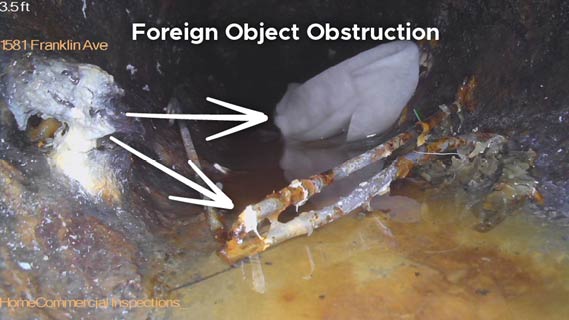
Grease or Sludge on the Sewer Camera Lens: What Can Still Be Confirmed?
Learn how grease, sludge and dirty water limit sewer-camera visibility, what can still be documented, and when cleaning or a second inspection may be needed.
Learn how grease, sludge and dirty water limit sewer-camera visibility, what can still be documented, and when cleaning or a second inspection may be needed.

Understand why camera push-cable footage is not the same as horizontal map distance, and how a sonde, receiver, depth estimate and narration document location.
Learn why a sewer camera may inspect the main building sewer but not every fixture branch, and how access, direction, fittings and documentation define the scope.
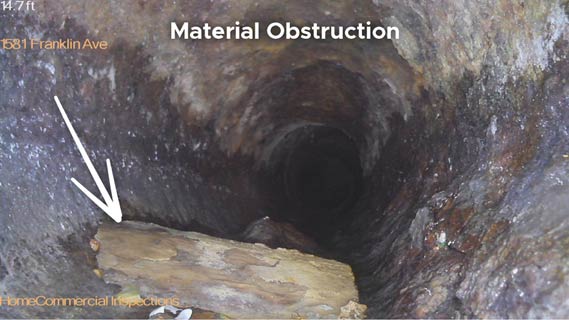
See how a sewer camera documents rust scale, reduced openings and cast-iron surface condition—and why a visible restriction needs footage, flow and access context.
Compare a sewer scope after hydrostatic testing: one documents visible pipe conditions, while the other evaluates whether a test section holds pressure.
Learn when a sewer camera can document the route toward a city tap, what locating can estimate, and why ownership boundaries require official confirmation.

Plan a sewer inspection before new flooring or cabinets so accessible evidence can inform a DFW remodel before finished surfaces limit options.
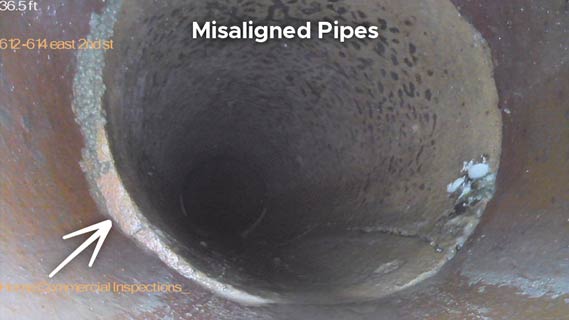
See what a sewer camera pipe transition can reveal about materials, joints, offsets, access, locating, and the limits of a DFW sewer inspection.
Camera cable length is only one limit. Access, bends, pipe size, debris, water, and route design determine how much sewer can actually be inspected.
New does not mean visible. A documented sewer camera inspection can establish the accessible line’s condition before a new-construction closing.